The Butter Trick That Gives Restaurant Sauces Their Glossy, Silky Finish — And How to Pull It Off at Home
If you've ever eaten at a restaurant that takes its food seriously and thought, "I don't know what they put in this sauce, but it's incredible" — there's a solid chance the answer was butter. Not butter melted into the sauce, not butter stirred in at the beginning. Butter added at the very end, in a specific way, that transforms a thin pan dripping into something glossy, rich, and impossibly smooth.
The technique is called beurre monté, and it's one of those professional kitchen fundamentals that rarely makes it into home cooking conversations. That's a shame, because it's not complicated, it doesn't require special equipment, and it works on almost everything — pan sauces, soups, braising liquids, even roasted vegetables.
What Beurre Monté Actually Is
Beurre monté — French for "mounted butter" — is an emulsion of butter in water. That might sound obvious (butter is already a mix of fat, water, and milk solids), but the key is what happens when you add cold butter to a small amount of warm water and whisk it continuously: the milk proteins and phospholipids in the butter act as natural emulsifiers, creating a stable, creamy suspension where tiny fat droplets are dispersed throughout a water phase.
The result is a liquid that's richer than water but lighter than straight melted butter. It has a silky, almost velvety mouthfeel and a bright, clean dairy flavor. Most importantly, it creates that glossy sheen on a sauce that signals richness before you've even taken a bite.
This is different from simply finishing a sauce with a pat of butter — a technique called monter au beurre that many home cooks have heard of. Monter au beurre adds richness but doesn't always create a fully stable emulsion. Beurre monté is a deliberate, maintained emulsion that you build from scratch and then use as a base or finishing element.
The Science of a Water-in-Fat Emulsion
Butter straight from the refrigerator is already an emulsion — specifically, a water-in-fat emulsion where water droplets are suspended in a continuous fat phase. When you melt butter carelessly (say, in a hot pan over high heat), you break that emulsion: the fat separates, the water evaporates, and the milk solids brown or burn. That's why clarified butter exists — it's what you get when you deliberately remove the water and milk solids, leaving only pure fat.
Beurre monté works in the opposite direction. You're creating a fat-in-water emulsion — tiny fat droplets dispersed in a water phase — by starting with a small amount of warm water and whisking in cold butter gradually. The cold temperature is critical: cold butter contains fat in a semi-solid state that disperses into droplets more easily than warm, liquid fat. The milk proteins in the butter (primarily casein) act as emulsifiers, coating those fat droplets and keeping them from coalescing.
The result is stable between roughly 160°F and 180°F. Go above that and the emulsion breaks — the proteins denature, the fat separates, and you're left with greasy, broken sauce. Go below 140°F and the fat starts to solidify, making the sauce thick and heavy. Temperature control is the entire game.
How to Make It
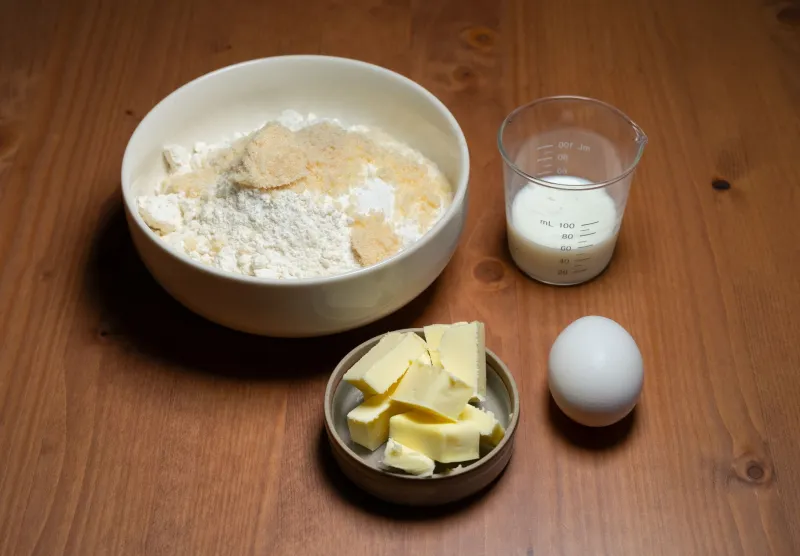
The basic technique is almost absurdly simple. Start with a tablespoon or two of water in a small saucepan over low heat. Bring it to a bare simmer — not a boil, just the point where you see a few small bubbles. Cut cold butter into tablespoon-sized pieces. Add one piece to the warm water and whisk constantly until it's fully incorporated and the mixture looks creamy and opaque. Add another piece and repeat.
That's it. The key variables are: the butter must be cold, the water must be warm (not hot), and you must whisk continuously to keep those fat droplets dispersed. Most chefs work with a ratio of about one tablespoon of water per four tablespoons of butter, but the ratio is flexible — what matters is the process.
You can build beurre monté with flavored liquid instead of plain water. Use the pan drippings from a roasted chicken, a splash of white wine, a spoonful of reduced stock, or even a bit of citrus juice. The liquid carries flavor; the butter carries richness and texture. Together, they create a sauce that tastes far more complex than the sum of its parts.
Where to Use It
Pan sauces are the most obvious application. After searing a steak or sautéing chicken thighs, pour off excess fat, add a splash of wine or stock to deglaze, and reduce it by half. Then, off the heat or over very low heat, whisk in cold butter piece by piece until the sauce is glossy and coats the back of a spoon. The result is a restaurant-quality pan sauce without a drop of cream.
Finishing soups and purees is a less obvious but equally effective use. A bowl of butternut squash soup finished with a spoonful of beurre monté has a silkiness that you simply can't get from adding cream — the mouthfeel is lighter, the flavor is cleaner, and the surface has that characteristic gloss.
Vegetable dishes benefit enormously. Blanched asparagus, roasted carrots, sautéed mushrooms — toss them in a small amount of beurre monté just before serving and they take on a richness and shine that makes them look and taste like restaurant side dishes.
Pasta is another natural fit. Instead of finishing pasta with butter and pasta water separately, try whisking a small amount of pasta water into cold butter to create a quick beurre monté, then toss your pasta in that. The emulsion coats each strand evenly in a way that just plopping butter into the pot doesn't achieve.
The One Rule You Can't Break
Temperature. It bears repeating because it's the single most common reason beurre monté fails at home. If your base liquid is too hot when you start adding butter, the fat will melt and separate immediately. If you let the finished emulsion sit over high heat, it will break. Keep everything in that 160–180°F sweet spot, work over low heat, and if you're not using it immediately, keep it warm in a small pot set over the lowest possible flame or in a warm water bath.
If your sauce does break — and it will happen at least once — don't panic. Add a tablespoon of cold water and whisk vigorously. Often, the emulsion will come back together. If it doesn't, you still have delicious flavored butter. There are worse outcomes.
A Technique Worth Keeping
Beurre monté is one of those techniques that professional cooks use almost reflexively, often without even naming it. It's behind the shine on the fish at your favorite bistro, the richness of the vegetables at a farm-to-table restaurant, the inexplicable depth of a simple pan sauce at a steakhouse. Now you know why — and more importantly, you know how to do it yourself.