Wet Dough Isn't a Mistake — It's the Point: What High Hydration Really Does to Your Bread
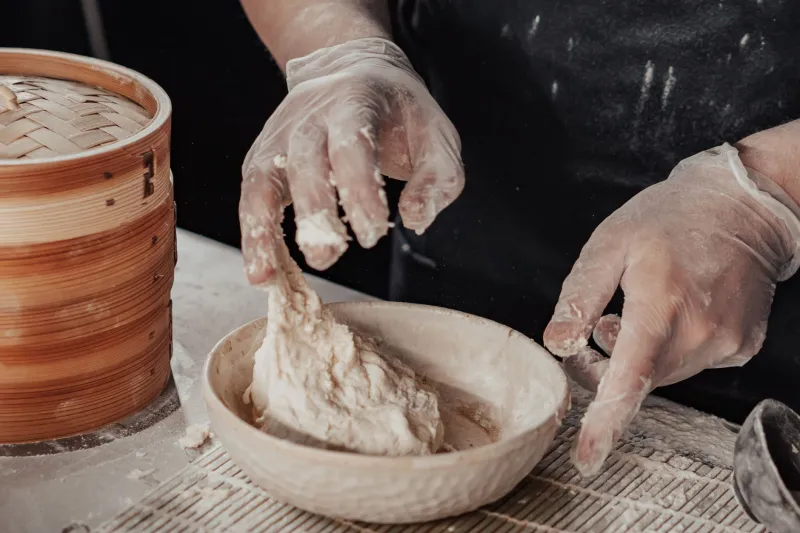
Every new bread baker hits the same wall. You follow the recipe, measure carefully, and then start mixing — and the dough is a sticky, shaggy mess that clings to your hands, your counter, and apparently your entire sense of self-worth as a cook. So you do what feels logical: you add more flour. A little at first, then a little more. The dough firms up, becomes manageable, and you feel like you've fixed something.
You haven't. You've just made denser bread.
This is one of the most common mistakes home bakers make, and it's completely understandable — but understanding why wetter dough produces better bread is the kind of knowledge that changes your baking permanently.
What Hydration Actually Means
Bakers talk about hydration as a percentage — the ratio of water to flour by weight. A dough at 60% hydration contains 60 grams of water for every 100 grams of flour. A dough at 80% hydration contains 80 grams of water for the same amount of flour. That extra 20 grams doesn't sound dramatic, but it fundamentally changes how the dough behaves, how the gluten develops, and what the finished loaf looks and tastes like.
Most beginner bread recipes land around 60–65% hydration because the dough is easier to handle. Artisan-style loaves — the ones with the open, irregular crumb and chewy, blistered crust that you see at good bakeries — typically run 72–80% or higher. Ciabatta, a notoriously wet dough, often exceeds 80%. The stickiness isn't a flaw in those recipes. It's the whole strategy.
Why Water Is Your Gluten's Best Friend
Gluten is the protein network that gives bread its structure. It forms when two proteins naturally present in wheat flour — glutenin and gliadin — hydrate and begin linking together into long, elastic chains. Without adequate water, this process is sluggish and incomplete. The proteins can't fully hydrate, the chains stay short and disorganized, and you end up with a tight, dense crumb that doesn't have room to expand properly during baking.
More water means more complete hydration of those proteins, which allows longer and more extensible gluten chains to form. Extensibility matters because during fermentation, the yeast produces carbon dioxide gas that needs to be trapped inside the dough. A more extensible gluten network can stretch to accommodate those bubbles without tearing — which is what gives high-hydration loaves their open, airy crumb structure.
Adding flour when your dough feels too wet short-circuits this process. You're diluting the water-to-protein ratio, stiffening the dough, and limiting how much the gluten can develop and stretch. The dough becomes easier to handle but structurally compromised.
The Role of Water in Starch Gelatinization
Gluten development is only half the story. The other major player is starch, which makes up the majority of flour by weight.
During baking, starch granules absorb water and gelatinize — they swell, burst, and set into a firm gel that forms the actual walls of the bread's crumb structure. This process requires heat and, critically, available water. In a lower-hydration dough, the available water is largely tied up in gluten development, leaving less for starch gelatinization. The result is a crumb that sets before it can fully expand.
In a high-hydration dough, there's more free water available during baking. Starch gelatinizes more completely, the crumb structure sets later in the bake (giving the loaf more time to spring up in the oven), and the finished texture is more tender and moist. This is also why high-hydration loaves stay fresh longer — there's more bound water in the crumb, and it takes longer to stale.
Why Professional Bakers Embrace the Mess
If you've watched any bread-baking video from a professional baker, you've probably noticed they seem completely unbothered by dough that looks like it belongs in a mixing bowl, not on a work surface. That's not performance — it's experience-based comfort with a process that looks chaotic but is actually working exactly as intended.
Professional bakers handle high-hydration dough using techniques specifically designed for wet, extensible doughs. Stretch-and-fold is the most common: instead of kneading (which works fine for stiffer doughs but tears and deflates wetter ones), you periodically reach under the dough, stretch a section upward, and fold it back over itself. This builds gluten structure gently and progressively over several hours of bulk fermentation, without working the dough so hard that you damage the developing network.
Bench scrapers — those flat metal or plastic tools that bakeries use constantly — are essential for working with sticky dough on a counter. They let you move, fold, and shape wet dough without it adhering to your hands. If you're baking high-hydration bread without one, get one. It costs about $8 and will change your relationship with wet dough overnight.
Lightly Wet Your Hands Instead of Flouring
This sounds counterintuitive, but wetting your hands slightly before handling sticky dough is far more effective than flouring them. Flour absorbs into the dough and changes the hydration ratio — exactly what you're trying to avoid. Water on your hands creates a temporary non-stick barrier without altering the dough's composition. Give it a try the next time your dough is sticking to everything, and notice how much easier the handling becomes.
Building Confidence With High-Hydration Dough
The honest answer is that working with wet dough is a skill that takes time to develop. Your first few attempts will probably feel awkward. The dough will stick to things it shouldn't. You'll have moments where you're genuinely unsure if you're making bread or soup.
But here's the thing: high-hydration doughs are actually more forgiving than stiff ones in some important ways. They're more resilient to over-mixing and harder to over-knead. They have longer fermentation windows, which means minor timing mistakes don't ruin the loaf. And the finished bread — even when it's not perfect — tends to have better flavor, better texture, and better crust than a lower-hydration loaf made with more technical precision.
Start with a dough around 72–75% hydration rather than jumping straight to 80%+. Use the stretch-and-fold method during bulk fermentation. Bake in a Dutch oven, which traps steam and helps the loaf spring up properly before the crust sets. And resist the urge to add flour.
The stickiness means it's working. Trust the water.