Rubbery vs. Silky Is a Ten-Degree Problem: What Restaurants Know About Eggs That You Keep Ignoring
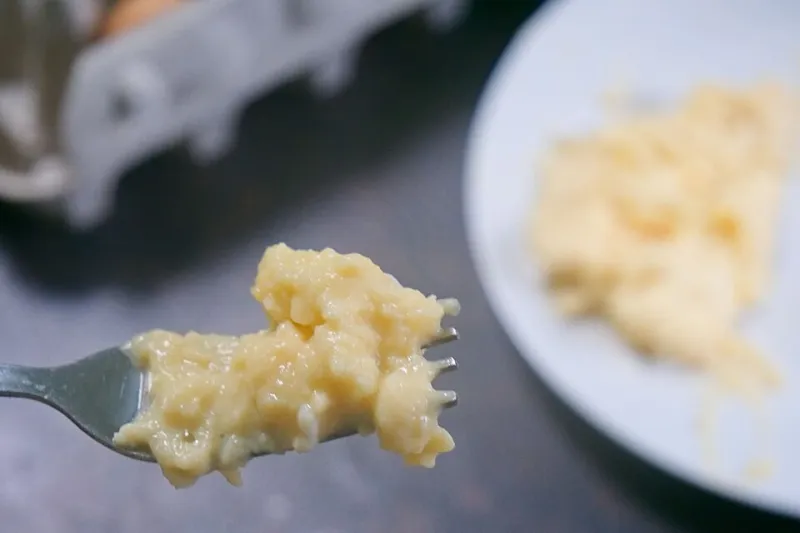
Photo: Marc, CC BY-SA 4.0, via Wikimedia Commons
Here's an uncomfortable truth: the difference between your scrambled eggs and the ones at the diner down the street isn't talent, equipment, or some secret ingredient. It's about ten degrees Fahrenheit.
Egg proteins begin to uncoil and bond with each other — coagulation — starting around 145°F for the whites and 150°F for the yolks. By 160°F and beyond, those protein networks tighten and squeeze out moisture. That's rubber. Not metaphorically — that's literally what rubbery eggs are: over-tightened protein mesh expelling water.
The Restaurant Principle: Lower Heat, Always
Professional kitchens cook eggs over heat levels that would horrify most home cooks. Why? Because a gentle pan gives you a wide window between "just set" and "ruined." Crank the burner to high and that window shrinks to seconds. Cook at medium-low and you have a full minute of control.
The French omelette is the purest expression of this: low heat, constant motion, and a finished curd that's barely solidified — glossy, trembling, almost sauce-like. The motion matters as much as the heat. Continuous stirring keeps the protein networks small and fine, so the eggs set into soft curds instead of dense slabs.
Fried Eggs: More Fat, Less Drama
The best fried eggs you've ever had were probably cooked in more fat than you'd comfortably use. A generous slick of butter (or olive oil, or bacon fat — this is America, after all) does two things: it conducts heat evenly across the pan's hot spots, and it caps the egg's maximum temperature near the fat's behavior range, buffering against scorching.
For over-easy converts: try basting instead of flipping. Spoon hot fat over the whites until they're just set. The yolk stays raw and loose, the whites cook through, and you never risk a broken yolk on a flip.
Soft-Boiled: The Only Recipe That Rewards Precision
Soft-boiled eggs are where the temperature math becomes non-negotiable. A yolk at 145°F is molten and sauce-like; at 158°F it's fudgy and jammy; at 170°F it's dry and chalky. That's the entire spectrum, and it spans barely twenty-five degrees.
The restaurant trick: lower eggs into already-boiling water for exactly 6½ minutes, then shock in ice water. The boil gives you a repeatable starting condition, the ice bath stops the carryover cooking that ruins so many home attempts. Your grandmother's "bring to a boil, turn off the heat, wait" method works too — but only if your pot, your eggs, and your patience are identical to hers.
The Carryover Problem Nobody Warns You About
Eggs keep cooking after they leave the heat. Residual heat in the pan and the egg's own mass push the internal temperature up several degrees in the first minute off the burner. This is why eggs that looked perfect in the pan arrive at the table rubbery.
The fix is to pull them early — genuinely early, when they still look underdone. Scrambled eggs should leave the pan at a consistency you'd call "too wet." By the time they hit the plate, they'll be exactly right.
Your Tuesday-Morning Checklist
- Medium-low heat, always.
- More butter than feels reasonable.
- Constant motion for creamy, zero motion for crispy lacy edges.
- Pull early. Then pull earlier than that.
None of this requires technique you don't already have. It just requires trusting temperature over time — and accepting that the eggs are done well before they look done.