The French Butter Sauce That Looks Impossible — And the Emulsion Logic That Makes It Easy
Photo: ppacificvancouver, CC BY 2.0, via Wikimedia Commons
Beurre blanc is one of those sauces that home cooks tend to approach with either reverence or avoidance, sometimes both at once. It's a classic of French cuisine — silky, tangy, rich — and it shows up on restaurant menus as a marker of kitchen seriousness. It also has a well-earned reputation for breaking at inconvenient moments, separating into a greasy puddle right as your guests are sitting down. But here's the thing: beurre blanc is not actually that difficult. It just requires understanding what kind of sauce it is, what's holding it together, and what specific conditions cause it to fall apart.
Once you have that framework, you can make it reliably. And the framework applies to a whole category of emulsion sauces beyond beurre blanc, which makes it worth learning properly.
What Beurre Blanc Actually Is
At its core, beurre blanc is an emulsion — a stable mixture of two things that don't naturally want to combine. In this case, those two things are water (from the wine and vinegar reduction) and fat (from the butter). Emulsions are everywhere in cooking: mayonnaise, hollandaise, vinaigrette, the pan sauce you finish with butter. They all depend on the same basic principle: you need an emulsifier to act as a molecular bridge between the fat and the water.
In hollandaise, that emulsifier is egg yolk, which is loaded with lecithin — a phospholipid molecule with one end that bonds to water and one end that bonds to fat. Lecithin essentially grabs both phases and holds them together.
Beurre blanc uses no egg yolk. So where does the emulsification come from? This is where it gets interesting.
The Role of Milk Solids and Temperature
Butter is not pure fat. It's approximately 80% fat, 16 to 18% water, and 2 to 4% milk solids — and those milk solids contain proteins and, crucially, a small amount of lecithin. That lecithin content is modest compared to egg yolk, which is why beurre blanc is considered a more fragile emulsion. But it's enough to work with, provided you manage temperature carefully.
Here's the key structural detail: the emulsion in beurre blanc depends on the butter fat being in a semi-solid state — not fully melted, not cold and hard, but somewhere in between. When butter fat is partially solid, it exists as tiny fat droplets dispersed through the water phase. The milk solid proteins and lecithin stabilize those droplets, keeping them from coalescing into a greasy pool. This is what gives the sauce its creamy, opaque appearance and smooth texture.
The temperature window for this state is surprisingly narrow: roughly 160°F to 180°F. Above 180°F, the fat melts completely, the emulsion breaks, and you have clarified butter floating on top of your wine reduction. Below 160°F, the sauce cools too much and the butter can congeal unevenly. Your job as the cook is to keep the sauce in that twenty-degree window the entire time you're building it.
The Reduction Is the Foundation
Before a single cube of butter goes in, you need a proper reduction. The classic base is a combination of dry white wine and white wine vinegar, reduced with shallots until only a few tablespoons of intensely flavored liquid remain. This reduction does two things. First, it concentrates the acidity and aromatics that give beurre blanc its characteristic tang — without it, the sauce would taste flat and greasy. Second, it provides the water phase of the emulsion. The butter you add is going to be dispersing its fat droplets into this liquid, so the liquid needs to be flavorful enough to anchor the whole sauce.
Some recipes add a tablespoon of heavy cream to the reduction before adding butter. This is not traditional, but it's not cheating either — the extra fat and protein in the cream give you a slightly more stable emulsion with a little more margin for error. If you're making beurre blanc for the first time, it's a reasonable safety net.
Adding the Butter: Technique Over Speed
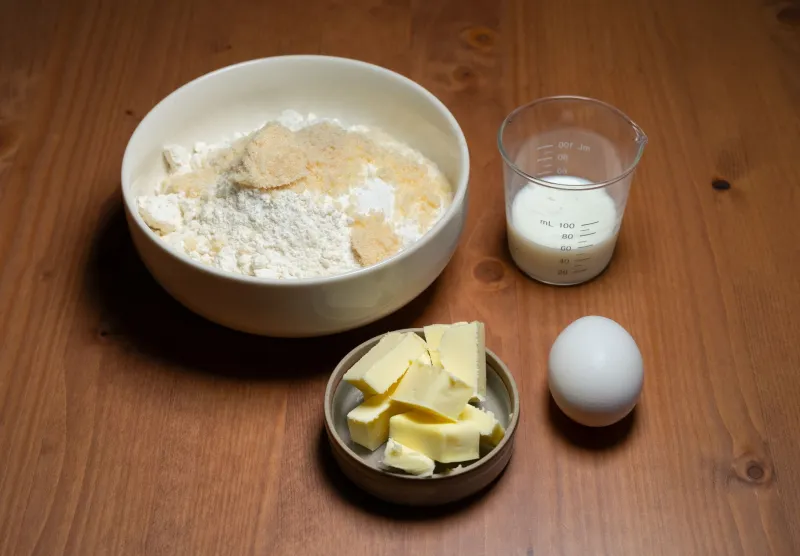
The butter goes in cold, cut into tablespoon-sized pieces, added one or two at a time over medium-low heat. Cold butter is essential. The temperature differential between the cold butter and the warm reduction is what creates the emulsification conditions — the butter melts gradually, releasing its fat in small, controlled amounts that the lecithin and milk proteins can stabilize before the next piece goes in.
Whisk constantly but not frantically. You're incorporating the butter into the liquid, not aerating it. Keep the pan moving off and on the burner to control temperature — this is an active process, not a set-it-and-forget-it situation. If you see the sauce start to look greasy or translucent, it's getting too hot. Pull it off the heat immediately and whisk in another cold piece of butter to bring the temperature back down.
A finished beurre blanc should be opaque, creamy, and coat the back of a spoon. It should look almost velvety. If it looks shiny and thin, it's on the verge of breaking.
When It Breaks — And How to Bring It Back
Breaks happen. The sauce gets too hot, or it sits too long, or you added the butter too fast. You'll know it's broken because the fat separates and pools on the surface, and the sauce looks greasy and thin rather than creamy and opaque.
The fix: remove the pan from heat entirely. Let it cool for 30 seconds. Then whisk in a tablespoon of cold water, or a single very cold cube of butter, whisking vigorously. In many cases, this re-establishes the emulsion. It doesn't always work if the sauce is fully separated and cold, but if you catch it early — within the first signs of breaking — recovery is usually possible.
The Broader Lesson: Temperature Is the Variable You're Managing
Beurre blanc teaches a principle that applies across a wide range of emulsion sauces: temperature is almost always the variable that determines whether an emulsion holds or breaks. Hollandaise breaks when it gets too hot and the egg proteins overcook. Vinaigrette separates when it sits at room temperature too long and the mechanical energy that created the emulsion dissipates. Pan sauces break when they're reduced too aggressively before the butter goes in.
In every case, the solution is the same: understand what temperature range your emulsifier needs to function, and manage your heat to stay inside it. That's not a beurre blanc skill. That's a fundamental cooking skill that beurre blanc just happens to teach very clearly.
Make the sauce enough times and you stop thinking about it consciously. The temperature management becomes intuitive, the butter goes in at the right pace, and what used to feel like a high-risk restaurant technique becomes a Tuesday-night pan sauce you reach for without hesitation.