The Gluten and Fat Science Behind Pie Crust That Shrinks — And Why Two Rest Periods Change Everything
You spent twenty minutes carefully crimping the edges. You draped the dough into the pan like you were handling something precious. You popped it in the oven, and ten minutes later — the whole thing had crept halfway down the walls, leaving you with a shallow, dense shell that could double as a frisbee.
Pie crust failure is one of the most demoralizing experiences in home baking, partly because the dough looked so promising going in. The problem, almost always, isn't the recipe. It's the physics happening inside the dough that nobody bothered to explain.
Let's fix that.
What Pie Dough Is Actually Trying to Do
At its core, pie dough is a controlled tension between two competing forces: gluten development and fat interference. Flour contains proteins — mainly glutenin and gliadin — that, when they come into contact with water and mechanical energy (mixing, kneading, pressing), link together into long elastic strands called gluten. Gluten is what gives bread its chew and structure. In pie crust, though, you want as little of it as possible — or more precisely, you want it short, weak, and disorganized.
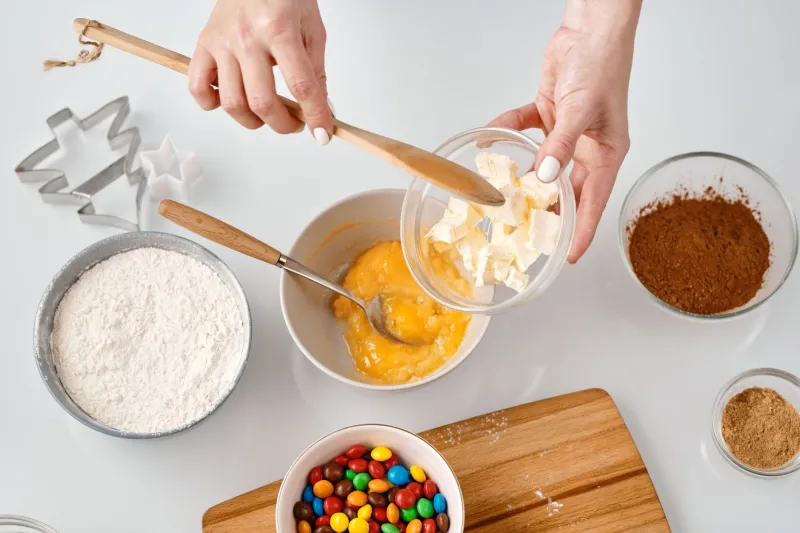
Fat is the disruptor. When butter (or shortening, or lard) is worked into flour before water is added, the fat coats the flour particles and physically blocks gluten proteins from bonding with each other. Less bonding means shorter, more fragile gluten networks — which translates to tender, crumbly, flaky texture instead of chewy or tough.
The catch is that this only works when the fat stays cold and solid. Warm, soft butter doesn't coat flour particles cleanly — it blends into the dough in a way that actually encourages gluten formation rather than interrupting it. Cold butter, cut into small pieces, stays in discrete chunks long enough to do its job.
Why Overworking Destroys the Texture
Every second you spend working pie dough after the water goes in is a second of gluten development. Water activates the proteins. Pressure and motion encourage them to link up. This is why experienced bakers describe mixing pie dough as "just until it comes together" — they're not being precious, they're being precise.
Overworked dough has a dense, almost Play-Doh-like quality when raw, and it bakes up cracker-like and hard. The gluten network has become too organized and too strong. No amount of chilling will undo that damage once it's done.
The other thing overworking does? It warms the dough. Your hands are roughly 98°F. The bowl, the counter, the rolling pin — all of it transfers heat. Warm dough means softening butter, which means the fat stops doing its job as a gluten disruptor and starts becoming part of the problem.
The Ice Water Thing Is Not a Suggestion
A lot of recipes call for ice water and home bakers treat it as optional — just cold tap water, right? It's not the same.
Ice water typically comes in around 32–35°F. Cold tap water in most American homes runs closer to 55–65°F, depending on the season and your region. That 20-to-30-degree difference matters a lot when you're trying to keep butter solid while simultaneously hydrating flour proteins.
The goal is to add just enough water to make the dough cohesive without triggering significant gluten development. Cold water slows the proteins down. It gives you a slightly longer window between "the dough is holding together" and "the gluten is fully activated and you've gone too far." Ice water buys you time and forgiveness. Warm water does the opposite.
Add the water a tablespoon at a time, toss with a fork rather than pressing with your hands, and stop the moment the dough holds together when you pinch a bit between your fingers.
The First Rest: Why the Fridge Matters After Mixing
Once the dough is mixed, it goes in the refrigerator — wrapped tightly, ideally for at least an hour, though overnight is better. This is the step most people skip when they're in a hurry, and it's the step that explains most of the shrinkage problems.
Two things happen during this rest. First, the gluten strands that did form during mixing relax. Gluten under tension wants to contract — that's the elastic quality that makes bread spring back when you poke it. When you roll out dough that hasn't rested, the gluten is still taut and coiled. It'll look fine going into the pan, but the moment heat hits it, those tense strands snap back toward their original position, pulling the crust up the walls.
A proper chill gives gluten time to loosen and settle into a more relaxed arrangement. Relaxed gluten doesn't shrink the same way.
Second, the rest allows the water in the dough to distribute more evenly through the flour. Freshly mixed dough often has pockets of drier and wetter flour. Even hydration means more consistent texture after baking — no dense spots, no crumbly edges.
The Second Rest: After Rolling, Before Baking
This one surprises people. You roll the dough, fit it into the pan, crimp the edges — and then it goes back in the refrigerator for another 20 to 30 minutes before it ever sees the oven.
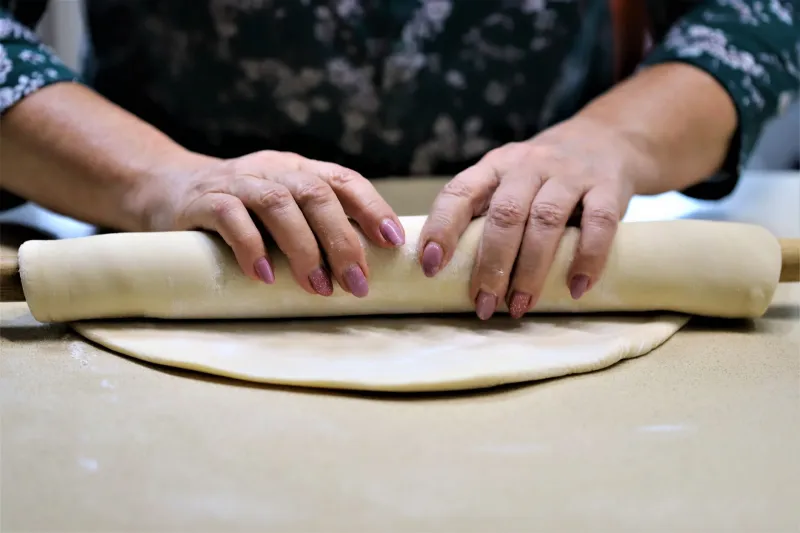
Rolling is a mechanical process that stresses the gluten again. Even well-rested dough gets some tension put back into it when you press and stretch it across the rolling pin and into the pan. A second chill gives the gluten another chance to relax before baking locks everything in place.
It also re-solidifies any butter that softened during rolling. Cold, firm butter in the dough creates steam pockets as it bakes — those steam pockets are what produce flaky layers. Soft butter just melts away and leaves a dense, greasy crumb instead.
For blind-baked shells (the kind you pre-bake before adding a no-bake filling), this second rest is especially critical. Without a filling to weight it down, the dough has nothing holding it in place as gluten contracts in the oven. Cold, relaxed dough going into a hot oven is the best insurance you have.
The One Technique Worth Memorizing
If there's a single rule to carry out of this article, it's this: keep everything cold, work fast, and rest longer than you think you need to.
Chill your bowl, your butter, even your rolling pin if your kitchen runs warm. Mix until the dough just barely holds together. Rest in the fridge for at least an hour — overnight if you can plan ahead. Roll quickly, fit gently, and chill again before baking.
Pie crust isn't difficult. It's just science that happens to be sensitive to temperature and time. Once you understand what the gluten and fat are actually doing inside that dough, every step in the process stops feeling like superstition and starts feeling like logic.
And the crust stops shrinking.