The Japanese Bread Trick That Keeps Your Loaf Soft for Days
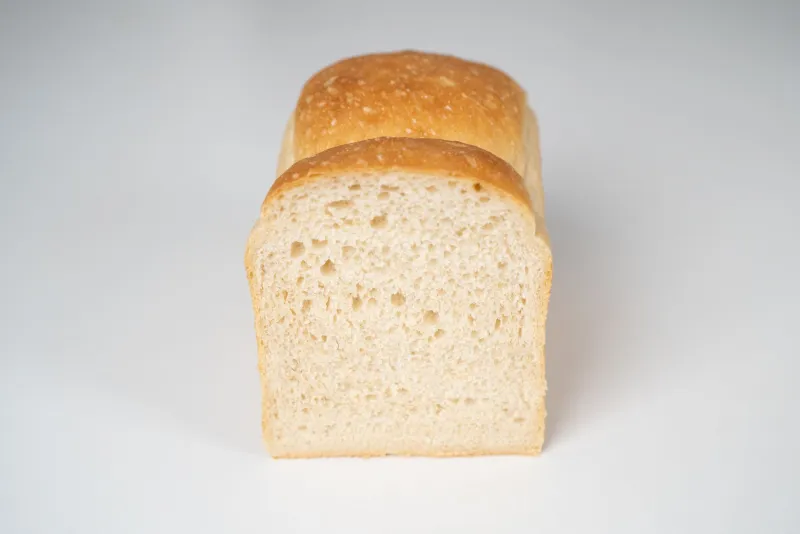
If you've ever bought a loaf of Japanese milk bread from an Asian bakery and wondered how something that white and pillowy could possibly exist without a chemistry lab involved, you're not alone. Shokupan — the square-topped, cloud-soft sandwich bread sold in thick, pre-sliced slabs across Japan — has a texture that defies what most American bakers think bread can be. It's tender on day one, yes. But it's almost equally tender on day three. That's the part that should make you curious.
 Photo: Asian bakery, via png.pngtree.com
The answer isn't a list of additives or a commercial bread improver. It's a technique called tangzhong, and it takes about five minutes on your stovetop.
What Tangzhong Actually Is (And Why It Matters)
Tangzhong is a cooked flour-and-water paste — sometimes called a water roux — that gets mixed into your bread dough before the rest of the ingredients come together. The ratio is simple: roughly one part bread flour to five parts water by weight, stirred together in a small saucepan over medium heat until it thickens into something that looks a little like loose pudding.
What's happening in that saucepan is starch gelatinization. Raw flour contains tightly wound starch granules that hold their shape at room temperature. When you introduce heat and water, those granules absorb moisture, swell up, and eventually burst — releasing their starches into a gel. That gel is extraordinarily good at holding onto water, even when exposed to the dry heat of your oven.
In practical terms, this means the tangzhong pre-hydrates a portion of your flour before it ever meets the yeast. The dough you end up with can absorb significantly more total liquid than a standard sandwich bread formula — sometimes 10 to 15 percent more — without becoming slack or unworkable. More moisture in the dough equals a softer, more supple crumb. And because that water is locked into a gelatinized starch matrix rather than just floating free, it releases slowly during baking and storage. The bread doesn't stale as fast because there's simply more moisture to lose before it gets there.
This is food science you can taste.
The Dough Itself: Richer Than You Think
Beyond the tangzhong, shokupan leans into richness in ways that standard American sandwich bread doesn't. Most recipes call for whole milk (warmed), an egg, a generous pour of heavy cream or butter, and enough sugar to tip the flavor toward something faintly sweet without crossing into dessert territory. The fat in the dairy coats the gluten strands as they develop, keeping the crumb tender and the crust thin. The sugar does double duty — feeding the yeast and contributing to a deep golden exterior during baking.
The result is a dough that feels more like brioche than a weekday sandwich loaf, but without brioche's fussiness or its need for extended chilling.
A Foolproof Weekend Recipe
For the tangzhong:
- 3 tablespoons (25g) bread flour
- ½ cup (120ml) water
Combine in a small saucepan over medium heat. Whisk constantly for 3 to 5 minutes until the mixture thickens and a spatula dragged across the bottom leaves a trail. Remove from heat and let cool to room temperature.
For the dough:
- 2¾ cups (350g) bread flour, plus more for dusting
- 2¼ teaspoons (one standard packet) instant yeast
- 3 tablespoons (38g) granulated sugar
- 1 teaspoon fine sea salt
- ½ cup (120ml) whole milk, warmed to about 100°F
- 1 large egg, room temperature
- 3 tablespoons (43g) unsalted butter, softened and cut into pieces
- All of the cooled tangzhong
Whisk together the flour, yeast, sugar, and salt in the bowl of a stand mixer. Add the warm milk, egg, and tangzhong. Mix on low with the dough hook until a shaggy dough forms, then increase to medium and knead for about 5 minutes. Add the butter a piece at a time, letting each addition incorporate before adding the next. Continue kneading for another 8 to 10 minutes until the dough is smooth, elastic, and pulls cleanly away from the bowl's sides. It will feel slightly tacky but shouldn't be sticky.
Transfer to a lightly oiled bowl, cover, and let rise at room temperature until doubled — about 1 to 1½ hours.
Divide the dough into four equal pieces. Shape each into a tight ball, then flatten slightly and roll into an oval. Fold the long edges toward the center like a letter, then roll the dough into a cylinder. Place all four cylinders side by side in a lightly greased 9x5-inch loaf pan. Cover loosely and let proof for another 45 minutes to an hour, until the dough crowns just above the rim of the pan.
Bake at 350°F for 30 to 35 minutes, until the top is deep golden brown and an instant-read thermometer inserted into the center reads 190°F. Brush the top with melted butter immediately out of the oven. Cool on a wire rack for at least 45 minutes before slicing.
Why This Technique Travels
Here's the part that makes tangzhong worth adding to your permanent toolkit: it works in almost any enriched dough. Dinner rolls made with a tangzhong base stay softer through a holiday meal. Cinnamon buns hold their moisture even after a night in the fridge. Hamburger buns don't turn to cardboard by the time the grill is fired up.
The rule of thumb is to replace about 5 to 10 percent of the total flour in any recipe with tangzhong — meaning you cook that portion with water first, then account for the added liquid in your overall hydration. It's a small adjustment with an outsized return.
For bakers who've already mastered the basics — who can shape a decent loaf, who understand gluten development, who've stopped being intimidated by yeast — shokupan is the natural next step. Not because it's complicated, but because it teaches you something important: that the best bread isn't just about what goes in the dough. It's about what you do to the ingredients before they ever come together.