The Secret Compound That Makes European Butter Taste Better — And How to Get It in Your Own Kitchen
Making butter at home feels like a win. You pour heavy cream into a stand mixer, let it rip for ten minutes, and out comes something golden and fresh that you made with your own two hands. Then you spread it on toast, take a bite, and think — why does this taste so flat?
You're not doing anything wrong. The cream is fine. The technique is fine. The problem is that you're missing the one step that separates everyday butter from the kind sold at farmers markets in little wax-paper logs, or imported from Normandy in foil-wrapped blocks. That step is culturing — and once you understand the science behind it, you'll never skip it again.
What's Actually Going On Inside European-Style Butter
Let's start with butterfat, because it matters more than most people realize. Standard American butter is required by law to contain at least 80% butterfat. European-style butters — the ones labeled "cultured" or with names that end in a vowel — typically clock in between 82% and 86%. That extra few percentage points sounds minor, but fat is flavor's best friend. More fat means a richer mouthfeel, a lower water content, and a more intense taste overall.
But here's the thing: even if you source high-fat cream and churn it perfectly, you can still end up with butter that tastes one-dimensional. That's because butterfat content is only half the story. The other half is a molecule called diacetyl.
Diacetyl (pronounced die-ASS-uh-til) is an organic compound that forms naturally during the fermentation of dairy. It's the primary reason cultured butter tastes buttery in that deep, almost nutty, slightly tangy way — the flavor your brain recognizes as fancy. Diacetyl is also what gives certain chardonnays that characteristic buttery note, and it's the compound food scientists have been synthetically replicating in microwave popcorn for decades (with considerably less delicious results).
In traditionally made European butter, diacetyl develops because the cream is fermented with live bacterial cultures before it ever gets churned. Those bacteria — mainly Lactococcus lactis and related strains — consume lactose and citric acid in the cream, producing lactic acid (which adds a gentle tang) and diacetyl (which delivers that layered, complex flavor). Skip the fermentation, and you skip the diacetyl. Simple as that.
Why American Butter Tastes Different by Design
This isn't a quality problem — it's a production choice. Most commercial butter made in the US is "sweet cream" butter, meaning the cream goes straight from the cow to the churn without any fermentation in between. That method is faster, more consistent, and easier to scale. The result is clean, mild, and perfectly good for most cooking applications.
But when you're making compound butters, finishing a pan sauce, or just slathering something on a really good piece of sourdough, that mild flavor profile leaves you wanting more. Your taste buds are looking for complexity, and sweet cream butter doesn't have it.
Some American brands do add lactic acid after churning to mimic the tang of cultured butter — check your label for "natural flavors" or "lactic acid" in the ingredients. It's not a bad workaround, but it's not the same as fermentation-developed diacetyl. The flavor is flatter, less integrated, more like a copy of a copy.
The Fermentation Step That Changes Everything
Culturing cream at home is genuinely easy, and it only requires one ingredient you might not keep on hand: crème fraîche (or cultured buttermilk, in a pinch). Both contain live active cultures that will kick off fermentation when added to heavy cream and left to sit at room temperature.
Here's the method:
What you need:
- 2 cups heavy cream (the higher the fat content, the better — look for cream labeled 40% fat if you can find it)
- 2 tablespoons full-fat crème fraîche
- A pinch of flaky sea salt (optional, for finishing)
The process:
- Combine the heavy cream and crème fraîche in a clean jar or bowl. Stir gently to incorporate.
- Cover loosely with a clean kitchen towel or plastic wrap with a few holes poked in it — you want air circulation, not a sealed environment.
- Leave it at room temperature (between 70°F and 75°F is ideal) for 12 to 18 hours. You're looking for the cream to thicken slightly and develop a pleasantly tangy smell. It shouldn't smell off or sour in an unpleasant way — if it does, something went wrong and you should start over.
- Once cultured, refrigerate the cream for at least 1 hour before churning. Cold cream churns more efficiently.
- Pour the chilled cultured cream into a stand mixer fitted with the whisk attachment. Whip on medium-high. It will go through the whipped cream stage and then — around the 8 to 12 minute mark — suddenly break. You'll see the fat solids separate from a thin, milky liquid. That liquid is true buttermilk (save it for pancakes or biscuits).
- Drain off the buttermilk, then knead the butter solids under cold running water until the water runs clear. This step removes residual buttermilk that would cause the butter to spoil faster.
- Pat dry, fold in salt if using, and shape into a log or pack into a ramekin.
What You'll Notice Right Away
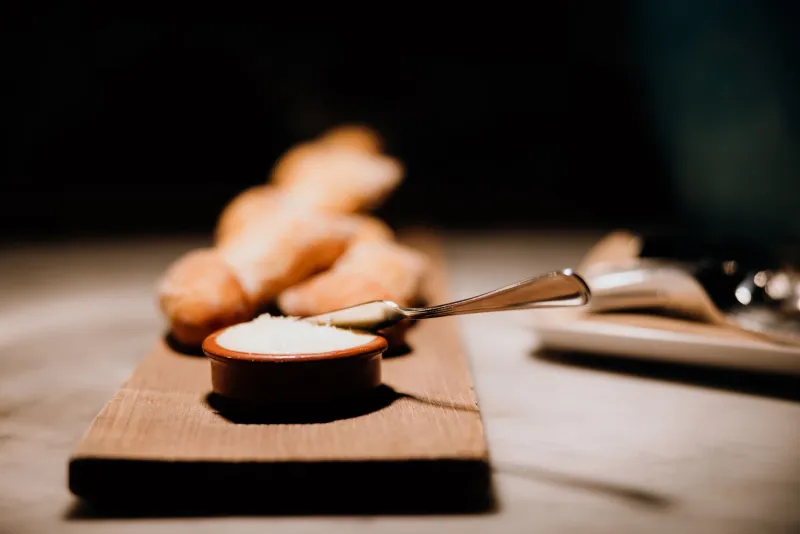
The flavor difference is immediate and obvious. Cultured homemade butter has that tangy, almost cheese-adjacent depth that you recognize from good French or Danish imports. It smells more complex. It melts differently — more slowly, more luxuriously. On warm bread, it's genuinely remarkable.
The fermentation window matters, too. A 12-hour culture produces butter that's lightly tangy and floral. Push it to 18 hours (especially in a slightly warmer kitchen) and the flavor becomes more pronounced, almost grassy. Play with the timing until you find the profile you like.
A Few Things Worth Knowing
The quality of your cream will have a significant impact on the final product. Ultra-pasteurized cream (the kind with the longest shelf life) has been heated so aggressively that some of the flavor compounds are already degraded. If you can find pasteurized (not ultra-pasteurized) cream from a local dairy or co-op, use it. The flavor improvement is noticeable.
Also: this butter won't last as long as store-bought. Without the industrial processing, you're looking at about 10 days in the refrigerator or up to 3 months in the freezer. Wrap it tightly in wax paper or parchment, then foil, to prevent it from absorbing fridge odors.
One batch of cultured homemade butter costs roughly the same as a mid-range grocery store import, but it tastes considerably better — and you'll actually understand why it tastes that way. That's the whole point.