Cold, Slow, and Worth It: The Gluten Science Behind Pizza Dough That Actually Tastes Like a Pizzeria Made It
You followed the recipe. You stretched the dough, loaded up the toppings, cranked the oven as high as it would go. And yet — the crust came out pale, dense, and kind of flavorless. The chew was off. The bottom was limp. It tasted like bread with sauce on it, not pizza.
The instinct is to blame your oven. Maybe you need a pizza stone. Maybe a steel. Maybe a wood-fired setup in your backyard. But here's the thing: equipment is not what separates a great pizzeria pie from a mediocre homemade one. The real difference was decided long before the dough ever got near any heat source. It happened — or didn't happen — during fermentation.
What Gluten Actually Is (And Why It Matters for Pizza)
Gluten gets talked about a lot, but rarely in a way that actually helps you bake better. Here's the short version: when wheat flour meets water, two proteins called glutenin and gliadin start bonding together into long, elastic chains. That network is gluten. It's what gives bread its structure, pasta its bite, and pizza crust its signature chew.
But gluten doesn't just appear fully formed the moment you add water. It builds over time. Kneading helps — it aligns those protein chains and strengthens the network — but time does something kneading alone can't. Given enough of it, gluten relaxes, reorganizes, and becomes more extensible. That's the quality that lets you stretch a round of dough paper-thin without it snapping back like a rubber band.
For pizza specifically, extensibility is everything. You need a dough that holds its shape once stretched but doesn't fight you on the way there. That balance takes time to develop.
The Flour Problem Most Home Cooks Don't Know They Have
Before we even get to fermentation, there's a foundational issue worth addressing: most home bakers are working with the wrong flour.
All-purpose flour, the stuff that lives in most American pantries, typically contains around 10 to 11 percent protein. That's fine for cookies and pancakes. It's not ideal for pizza. Pizzeria doughs are usually made with higher-protein flours — bread flour runs 12 to 13 percent, and true Neapolitan-style pies often use 00 flour milled from high-protein wheat, which produces an exceptionally smooth, silky dough.
More protein means more potential for gluten formation. It means a stronger network, better chew, and a crust that can withstand a screaming hot oven without turning to cardboard. If you've been using all-purpose and wondering why your crust lacks structure, switching to bread flour alone will make a noticeable difference. It's an easy swap and widely available at any grocery store.
Why Fast Dough Tastes Like Nothing
Most weeknight pizza recipes call for instant yeast and a one-hour rise at room temperature. That's enough time for the dough to puff up and become workable, but it's not enough time for flavor to develop.
Flavor in bread — and in pizza dough — comes primarily from fermentation byproducts. As yeast consumes sugars in the flour, it produces carbon dioxide (which makes the dough rise) and a range of organic acids and alcohols that contribute complexity and depth. A fast, warm rise gets you the gas but skips most of the flavor chemistry. You end up with something that tastes yeasty in a one-dimensional way, without the subtle tang and nuttiness that make a great crust worth eating on its own.
Lactic acid bacteria, which are naturally present in flour and thrive in cooler, slower environments, play a huge role here too. Given time and a cold environment, these microorganisms produce the kinds of acids that give sourdough its character — and that give slow-fermented pizza dough its edge over the quick stuff.
Cold Fermentation: The Technique That Changes Everything
This is the part that pizzerias figured out a long time ago and that most home recipes still don't emphasize enough: cold fermentation is the single biggest upgrade you can make to your pizza game.
Here's how it works. After mixing and a brief knead, you shape your dough into a ball, coat it lightly in oil, seal it in a container or zip-lock bag, and park it in the refrigerator. Not for an hour. Not overnight. Ideally for 48 to 72 hours.
In the cold, yeast activity slows dramatically. The rise happens gradually, almost imperceptibly. But the enzymatic activity in the dough keeps humming along. Enzymes called proteases begin breaking down some of the gluten proteins, which paradoxically makes the dough more extensible and easier to stretch. Amylases convert starches into sugars, which feed the yeast, contribute to browning, and build flavor compounds. The whole dough essentially has time to become more than the sum of its parts.
By the time you pull that dough out after two or three days, it will smell different — more complex, slightly tangy. It will feel different — silkier, more relaxed. And once baked, it will taste different in ways that a 60-minute dough simply cannot match.
The practical commitment here is minimal. Ten minutes of mixing on a Thursday night, and you're set up for a legitimately great pizza on Saturday or Sunday.
The Shaping Mistake That Wastes All Your Work
You've used the right flour. You've waited 72 hours. Now comes the moment where a lot of home cooks accidentally undo everything.
When you take cold-fermented dough out of the fridge, it needs to come to room temperature before shaping — at least 45 minutes to an hour, sometimes longer in a cold kitchen. Cold dough is tight. The gluten is contracted. If you try to stretch it immediately, it will resist, tear, or spring back into a dense little disk that refuses to cooperate.
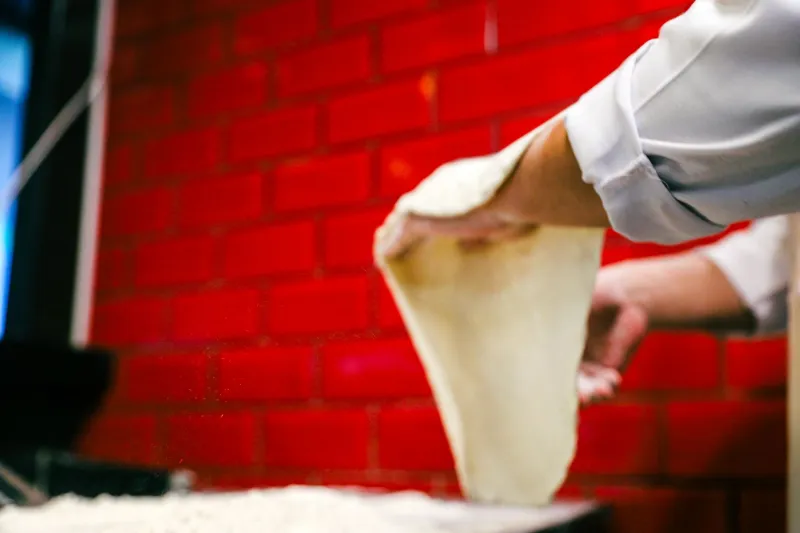
Given time to warm up, the gluten relaxes and the dough becomes genuinely easy to work with. Stretch it gently with your hands — not a rolling pin, which degasses the dough and flattens the airy structure you spent days building. Work from the center outward, let gravity help, and be patient. You're not fighting the dough; you're coaxing it.
A rolling pin feels like a shortcut, but it's actually a setback. Those gas bubbles trapped in the dough during fermentation are what give the crust its irregular, blistered texture when it hits a hot surface. Roll them out and you lose that character entirely.
The Bottom Line
Great pizza dough is less about technique in the moment and more about planning ahead. Use bread flour. Mix a simple dough. Let it ferment in the fridge for two to three days. Bring it to room temperature before shaping, and stretch it by hand.
None of those steps are difficult. What they require is time — and the understanding that time is doing actual, measurable work on the flavor and texture of your dough. That's the knowledge gap between a pizzeria and a home kitchen, and now you've closed it.