The Egg Yolk Ratio That Separates Restaurant Pasta from Everything Else You've Made at Home
The Egg Yolk Ratio That Separates Restaurant Pasta from Everything Else You've Made at Home
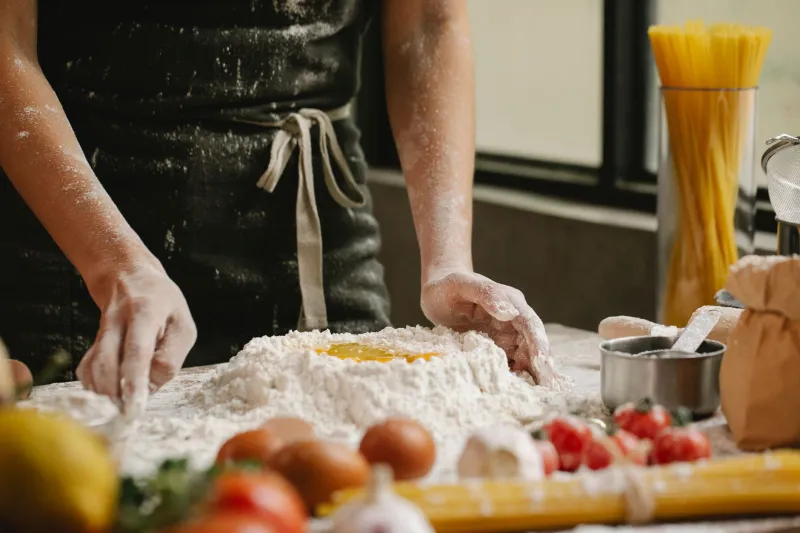
There's a particular kind of frustration that comes from making fresh pasta at home, rolling it out beautifully, cooking it perfectly, and still ending up with something that tastes... fine. Not bad. Just not that. Not like the stuff at your favorite Italian spot that practically melts on your tongue and has that deep amber color you can't stop thinking about.
Here's what nobody tells you when you're staring at a recipe that just says "2 eggs, 2 cups flour": the type of egg matters just as much as the number of eggs. More specifically, the ratio of whole eggs to yolks is the single biggest variable separating average homemade pasta from the kind of dough professional kitchens obsess over.
What's Actually in an Egg Yolk (And Why It Matters So Much)
A whole egg is two very different things working together. The white is mostly water and protein — specifically albumin — which contributes structure and elasticity to dough but very little in the way of richness or color. The yolk, on the other hand, is a concentrated package of fat, emulsifiers, and pigment. About 30% of an egg yolk is fat, and it's loaded with lecithin, one of the most powerful natural emulsifiers in your kitchen.
When you're making pasta dough, fat plays a direct role in how gluten networks form. Gluten develops when two proteins in flour — glutenin and gliadin — hydrate and link together into long, elastic chains. Fat interrupts that process in a very specific way: it coats the flour particles and limits how aggressively those gluten strands bond. The result is a dough that's still strong enough to roll thin without tearing, but tender enough to feel almost silky when you bite into it.
More whole eggs means more water in your dough (from the whites), which speeds up gluten development and produces a chewier, bouncier pasta — great for something like a rustic orecchiette, but not what you want for a delicate tagliatelle. More yolks means more fat, less water, slower gluten development, and a final texture that's genuinely luxurious.
Why Restaurant Kitchens Go Heavy on the Yolks
High-end Italian restaurants — and plenty of mid-range ones that take their pasta seriously — frequently use doughs built from nothing but flour and yolks. No whites at all. It's not a flex for its own sake; it's a deliberate technique with real, measurable results.
All-yolk dough is richer and more flavorful because fat carries taste compounds in ways water simply can't. It also produces that deep golden color you associate with quality fresh pasta — that comes directly from the carotenoid pigments in the yolk, and the more yolks you use, the more vivid the result. Some chefs specifically seek out eggs from pasture-raised hens precisely because those yolks tend to be more intensely pigmented.
The texture difference is equally significant. Because all-yolk doughs have less water, they're denser and more compact before cooking. When they hit boiling water, they hydrate and open up in a way that gives each strand a slightly creamy, almost custardy quality in the center. That's not a description you'd ever use for pasta made with a standard whole-egg recipe.
How to Actually Adjust Your Own Recipe
You don't have to go full all-yolk to notice a dramatic improvement. A simple starting shift is to replace two of your whole eggs with four additional yolks. So instead of 2 whole eggs per 200 grams of flour (a common baseline), try 1 whole egg and 4 yolks. That's a meaningful step toward a richer dough without requiring you to figure out what to do with a bowl of leftover whites (though, for the record: meringue, angel food cake, or a frittata all work beautifully).
If you want to go further, a fully traditional Emilia-Romagna-style dough uses roughly 1 yolk per 30 grams of flour with no whites at all. For a single serving of pasta — about 100 grams of flour — that's approximately 3 to 4 yolks, depending on size. The dough will feel stiffer and drier than you're used to. That's correct. Don't panic and add water.
What to Watch For When You're Kneading
High-yolk dough behaves differently at every stage, and knowing what to expect keeps you from overcorrecting.
At the start, the dough will feel almost crumbly and hard to bring together. This is normal. The fat is resisting full hydration. Keep working it — fold, press, rotate — and within five to seven minutes it will start to smooth out. By the ten-minute mark it should feel like firm, pliable clay: smooth on the surface, slightly tacky but not sticky, and holding together cleanly when you press a thumb into it.
If the dough feels genuinely dry and cracking even after ten minutes of kneading, add moisture in tiny increments — we're talking a teaspoon of water at a time, worked in slowly. But be conservative. High-yolk doughs are supposed to be firmer than whole-egg doughs, and adding too much liquid will undermine the whole point.
The Rest Period Isn't Optional — It's Where the Magic Happens
This is where a lot of home cooks shortchange themselves. After kneading, the gluten network you've built is tight and stressed. If you try to roll the dough now, it'll spring back every time you push it thin, fighting you at every pass of the rolling pin.
Wrapping the dough tightly in plastic and resting it at room temperature for at least 30 minutes — and ideally closer to an hour — allows those gluten strands to relax and redistribute. The fat from the yolks gets more evenly integrated throughout the dough as well. The result is a dough that rolls out almost effortlessly, stretching smoothly and holding its shape without tearing.
Some pasta makers rest their dough in the refrigerator overnight, which slows gluten relaxation but also allows for a subtle fermentation of the flour's natural starches that adds a faint depth of flavor. If you have the time, it's worth trying at least once.
The Payoff
Once you've rolled and cut your pasta and dropped it into well-salted boiling water, the difference will be obvious within about 90 seconds. High-yolk pasta cooks fast — sometimes faster than you expect — and the strands will have a color and sheen that whole-egg pasta just doesn't match.
Toss it with something simple: brown butter and sage, a light Parmesan cream, or even just good olive oil and black pepper. Rich dough doesn't need a complicated sauce. It needs space to be the thing you notice.
That restaurant-quality pasta you've been chasing isn't about equipment, or a special imported flour, or some technique they're keeping from you. It's about understanding that eggs aren't interchangeable, that fat and water do fundamentally different things inside a dough, and that resting isn't just a suggestion on a recipe card — it's the step that makes everything else work.