The Temperature Line Your Hollandaise Keeps Crossing — And How to Finally Stay on the Right Side of It
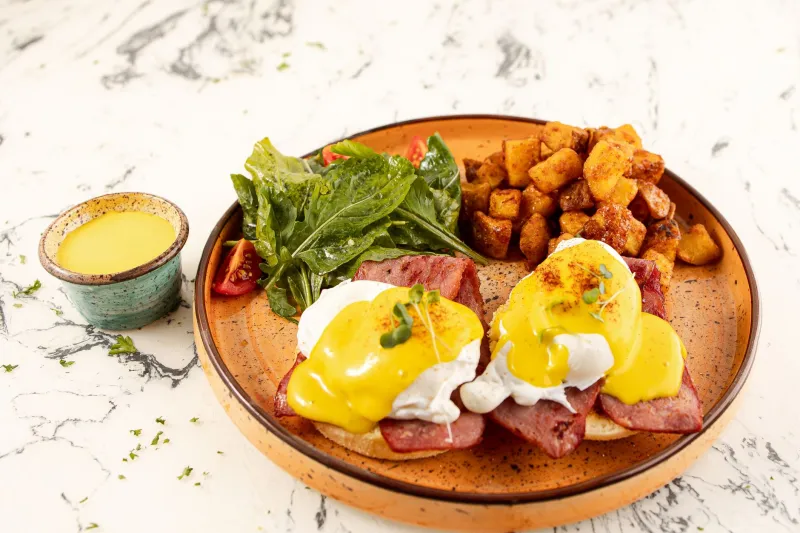
Hollandaise has a reputation it doesn't entirely deserve. Home cooks treat it like some kind of culinary gamble — whisk hard, hope for the best, and brace for the moment the whole thing turns into a greasy, curdled mess. But the sauce isn't capricious. It breaks for a reason, and that reason is almost always the same: heat that climbs just a little too high, just a little too fast.
Understanding why hollandaise behaves the way it does means getting comfortable with a few ideas from food science. Not textbook chemistry — just the kind of practical knowledge that makes you a more confident cook.
What Hollandaise Actually Is (And Why That Matters)
At its core, hollandaise is an emulsion — a stable suspension of fat molecules dispersed through a water-based liquid. Butter is mostly fat. Egg yolks contain water, some fat of their own, and — critically — lecithin, a natural emulsifier. Lecithin molecules have one end that bonds with fat and one end that bonds with water, which is what allows them to act as a kind of molecular bridge, holding butter and liquid together in a smooth, cohesive sauce.
The problem is that this bridge is temperature-sensitive. Egg yolk proteins, when gently heated, unfold and stretch out, helping to trap and stabilize fat droplets in suspension. That's the good version of what heat does. But push the temperature too far, and those same proteins snap — they coagulate, clump together, and squeeze out the fat they were holding. That's when you get scrambled eggs floating in a pool of clarified butter. That's a broken hollandaise.
The window between "just right" and "too far" is narrower than most people expect.
The Exact Numbers You Need to Know
Egg yolk proteins begin to set around 149°F (65°C) and fully coagulate somewhere between 158°F and 165°F (70–74°C). Your target zone for hollandaise sits between roughly 140°F and 155°F (60–68°C) — warm enough to cook the yolks into a thick, stable ribbon, but cool enough to keep them from seizing.
Here's the part most recipes gloss over: you're not working directly over a burner. You're working over a double boiler — a heatproof bowl set above a pot of barely simmering water. The steam below provides indirect, gentler heat. But "gentle" doesn't mean "safe by default." If the water is boiling hard, or if the bottom of your bowl is actually touching the water, you're running hotter than you think. Many home cooks set up their double boiler correctly and then crank the burner — and that's where things go sideways.
The water beneath your bowl should be simmering, not rolling. You should be able to hold your hand near the steam without flinching. If the water is boiling aggressively, drop it down. The sauce will take a couple of extra minutes and it will be infinitely more forgiving.
Why Whisking Speed Isn't Just About Texture
You've probably been told to whisk constantly. That advice is right, but the reason matters. Continuous whisking does two things simultaneously: it physically breaks fat droplets into smaller pieces (making the emulsion more stable) and it moves the egg mixture away from the heat source at the bowl's bottom, distributing temperature evenly throughout.
Stop whisking — even briefly — and the yolks sitting against the warm bowl continue to cook while the rest of the sauce sits idle. Uneven cooking is one of the fastest ways to push part of your emulsion over the edge while the rest is still underdone. A steady, rhythmic whisk keeps everything moving, keeps the temperature uniform, and gives lecithin the best possible conditions to do its job.
Your whisk should be touching the entire bottom of the bowl in wide, sweeping strokes. Don't just agitate the center. Work the edges. That's where heat concentrates.
Three Warning Signs That Appear Before the Break
Hollandaise doesn't break without warning. There are three visual cues that appear in the minutes before full separation — and if you catch any of them, you still have time to recover.
1. The mixture starts to look grainy. When yolks begin to overcook, the texture shifts from smooth and glossy to slightly textured, almost like very fine wet sand. This is early-stage protein coagulation. Pull the bowl off the heat immediately and whisk vigorously over an ice bath or cold towel.
2. The sauce suddenly thins out. This one surprises people. Right before a full break, hollandaise often goes through a brief phase where it looks thinner and more liquid than it should. The emulsion structure is starting to collapse, releasing water. Don't add more butter — remove the heat.
3. Visible fat pooling at the edges. Butter separating and collecting around the rim of the bowl is a clear sign the emulsion has started to fail. You're not quite at the point of no return, but you're close.
The Rescue Technique That Actually Works
If your hollandaise does break — and at some point it will — don't throw it out. The fix is straightforward and takes about two minutes.
In a clean bowl, whisk together one fresh egg yolk with a teaspoon of warm water until smooth. Then, very slowly — drop by drop at first — whisk your broken sauce into the new yolk, treating the curdled mixture exactly like you would clarified butter in a fresh batch. The new yolk provides fresh lecithin and uncooked proteins to rebuild the emulsion around the separated fat. Once you've incorporated about half the broken sauce and the new base looks thick and stable, you can add the rest in a thin, steady stream.
The key word is slowly. Rushing this step is what causes the second break.
A Few Practical Adjustments Worth Making
Beyond temperature control, a couple of small technique shifts make a meaningful difference. Adding your butter gradually — not all at once — gives the emulsion time to stabilize between additions. Start with just a few drops, then increase to a thin stream as the sauce builds body. Also, using clarified butter (or ghee) instead of whole butter removes most of the water content from the fat, which gives you slightly more latitude in the emulsion and reduces the risk of the sauce becoming too thin.
Finally, keep a small bowl of ice water nearby while you cook. If the sauce ever feels like it's running too hot, just setting the bowl on the ice for ten seconds — while continuing to whisk — can pull you back from the edge.
Hollandaise is worth learning. It's the kind of sauce that makes a weekend brunch feel like something special, and once you understand what it wants from you, it stops feeling like a gamble and starts feeling like a skill.