Why Your Pan Sauce Tastes One-Dimensional — And How Acid Changes Everything
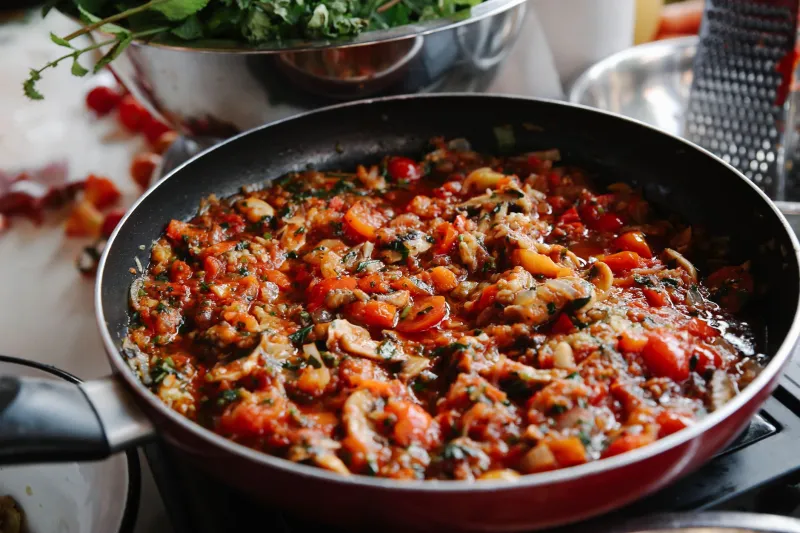
You sear a beautiful chicken thigh. The pan is gorgeous — dark, sticky bits of caramelized protein coating the bottom, the kind of fond that smells like dinner is going to be great. You deglaze with wine, add some stock, reduce it down, swirl in butter. You taste it.
Flat. Heavy. Vaguely meaty, but missing something you can't quite name.
That something is almost always balance, and the missing piece is almost always acid.
What Fond Actually Is — And Why It's the Starting Point
Before we get into acid, it helps to understand what you're working with when you make a pan sauce. Fond — that browned residue stuck to the bottom of your pan — is the product of the Maillard reaction, the same browning chemistry responsible for the crust on a steak, the color on roasted vegetables, and the flavor of toasted bread. It's a concentrated mixture of caramelized sugars, denatured proteins, and hundreds of flavor compounds that develop when heat drives moisture out of food and surface temperatures climb above about 300°F.
When you deglaze with liquid, those compounds dissolve into your sauce, giving you an instant flavor base that no amount of added ingredients can fully replicate. That's the good news. The challenge is that fond-based sauces are rich, dark, and intensely savory — which means they lean heavily toward one end of the flavor spectrum. Without something to pull in the opposite direction, they taste muddy.
Enter acid.
The Chemistry of What Acid Does in a Hot Pan
Acid in cooking isn't just about making something taste "bright." It's doing real chemical work.
First, it affects how you perceive other flavors. Acidity suppresses bitterness and amplifies savory notes — this is why a squeeze of lemon on roasted vegetables or a splash of vinegar in a braise can make the whole dish taste more like itself, just sharper and more defined. It's not adding a new flavor so much as it's clearing away the noise so the existing flavors come through more cleanly.
Second, acid interacts with fats. When you're finishing a pan sauce with butter — a technique called monter au beurre in classical French cooking — the emulsification process is partly chemical. Fat droplets need to stay suspended in the liquid rather than pooling on top. A slightly acidic environment helps stabilize that emulsion. This is why sauces finished with butter in a properly acidulated liquid have that glossy, cohesive look, while butter added to a neutral or alkaline liquid tends to break and float.
Third, acid affects the texture of collagen-rich pan drippings. When you're working with a sauce built from roasted meat drippings or bone-in cuts, there's dissolved collagen in the mix. Acid helps break down some of that collagen into gelatin, which contributes body and that lip-coating richness you get from a really good restaurant sauce.
When to Add It — And Why Order Matters
Most recipes tell you to deglaze with wine, which is acidic. That's a start. But wine added at the beginning of a reduction loses much of its acidity as it cooks — the volatile acids evaporate along with the alcohol. What you're left with is the fruit and tannin character of the wine, minus the brightness.
This is why professional cooks often add acid in two stages: once early (in the deglaze) to lift the fond and build the base, and once at the very end (a small splash of vinegar, a squeeze of citrus, or a few drops of verjuice) to restore the brightness that cooking drove off. The finishing acid doesn't need to be the same as the cooking acid — in fact, using two different sources often creates more complexity.
For a simple chicken pan sauce, try deglazing with dry white wine, reducing with chicken stock, finishing with butter, and then adding a small splash of sherry vinegar or white wine vinegar off the heat right before serving. Taste it before and after that final addition. The difference is startling.
A Practical Tasting Framework
The problem with telling someone to "balance" a sauce is that it's abstract. Here's a more concrete way to think about it:
Taste for richness first. Does the sauce feel heavy and coating on your tongue, or does it feel light and thin? Richness comes from fat and gelatin. If it's too thin, keep reducing. If it's too heavy, you're going to need more acid.
Taste for salt next. Salt and acid work together — a sauce that tastes flat even after seasoning often needs acid more than it needs more salt. Don't keep salting a flat sauce; try a few drops of something acidic first.
Taste for brightness last. This is the quality that makes a sauce feel alive rather than inert. It should lift slightly at the back of your palate. If it doesn't, add your finishing acid in very small increments — a few drops at a time — stirring and tasting between each addition. You're not trying to make the sauce taste sour. You're trying to make it taste like more of itself.
Choosing the Right Acid for the Job
Not all acids behave the same way in a pan sauce, and matching your acid to your protein and flavor profile matters.
Red wine vinegar works well with beef and lamb-based sauces, where its tannic edge complements the richness of the meat.
Sherry vinegar is one of the most versatile finishing acids in a home kitchen — nutty, complex, and not as sharp as red wine vinegar. It works with chicken, pork, and even mushroom-based sauces.
Lemon juice is ideal for lighter sauces built around fish, shellfish, or white wine. It's volatile, though, so add it at the very last moment.
Dijon mustard is technically acidic (it contains vinegar) and also acts as an emulsifier, making it particularly useful in cream-based pan sauces where you want both brightness and stability.
The best pan sauces aren't complicated — they're calibrated. Once you start thinking about acid as a functional ingredient rather than an optional flourish, you'll find yourself reaching for it instinctively, and your sauces will stop tasting like something's missing.