The Starch Secret Behind Silky Risotto — And Why Timing Is Everything
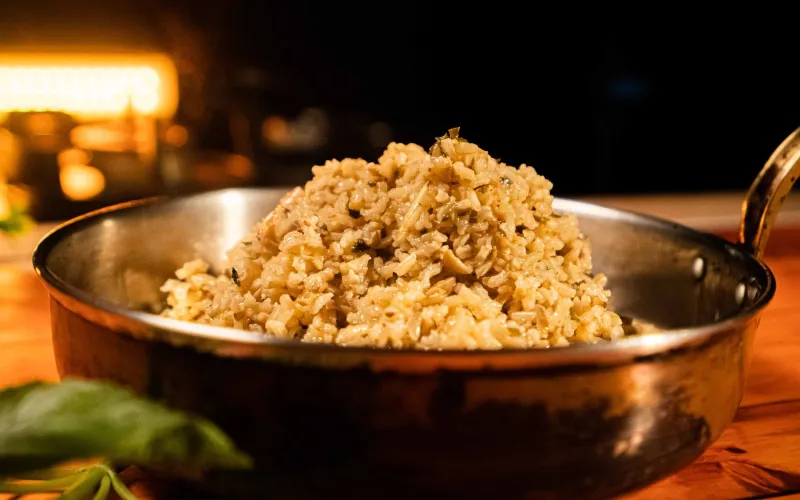
There's a moment at a good Italian restaurant when the server sets down a bowl of risotto and it kind of… exhales. It spreads slightly, flowing outward in a lazy, creamy wave before settling into itself. It's almost hypnotic. Then you try to recreate it at home and end up with something that looks more like sticky rice pudding.
You probably followed the recipe. You stood at the stove for 20 minutes, ladle in hand, adding warm broth bit by bit. So what went wrong?
The answer lives inside each grain of Arborio — and it has everything to do with starch.
Two Types of Starch, One Big Difference
Risotto rice — whether you're using Arborio, Carnaroli, or Vialone Nano — is structurally different from long-grain varieties like basmati or jasmine. The key distinction is in its starch composition. All rice contains two starch molecules: amylose and amylopectin. Long-grain rice is relatively high in amylose, which is a tightly coiled, linear molecule that tends to firm up and separate when cooked. That's why your basmati grains stay fluffy and distinct.
Short-grain Italian risotto rice, on the other hand, is loaded with amylopectin — a branchy, highly soluble molecule that swells dramatically when exposed to heat and moisture. When you stir a pot of risotto, you're not just mixing things around. You're physically abrading the exterior of each grain, coaxing that amylopectin out into the cooking liquid. That released starch is what creates the creamy, sauce-like consistency that defines a proper risotto.
So stirring isn't just busywork. It's the mechanism that builds your sauce.
Why the Rice Variety Actually Matters
Arborio is the variety most Americans reach for, and it works fine — but it's worth knowing that it has the highest amylose content among common risotto rices, which means it can turn gluey faster if you push it too hard. Carnaroli, often called the "king of risotto rice" by Italian chefs, holds its structure better under prolonged cooking and releases starch more gradually, giving you a longer window to nail the texture before things go sideways. Vialone Nano, popular in the Veneto region, sits somewhere in between and absorbs liquid particularly well.
If you've been struggling with risotto that either turns to paste or loses its creaminess quickly, switching from Arborio to Carnaroli is one of the easiest upgrades you can make. Look for it at Italian specialty stores or order it online — it's increasingly available at larger grocery chains too.
The Stirring Rhythm That Actually Works
Here's where a lot of home cooks get tripped up: they either stir constantly without purpose, or they walk away and let the rice sit. Neither approach is quite right.
Professional cooks use what you might call an active-passive rhythm. They stir vigorously when adding each new ladle of liquid — this is the moment when the fresh hot broth hits the rice and you want maximum starch release. Then they ease off slightly, letting the liquid absorb and the rice simmer gently before the next addition. This rhythm prevents two common failure modes: under-stirring (which gives you separated, brothy risotto with no creaminess) and over-stirring (which ruptures too many starch granules too early and produces gluey paste).
The other variable is heat. You want a steady, moderate simmer — not a rolling boil. Boiling too aggressively tears the grains apart and sends starch into the liquid faster than you can manage it. A calm, consistent bubble gives you control.
The Mantecatura Moment — And Why You're Probably Skipping It
This is the real restaurant secret, and it has a name: mantecatura. It's the final step where the risotto comes off the heat entirely and gets beaten vigorously with cold butter and grated Parmigiano-Reggiano.
The cold butter is crucial. When you beat cold fat into hot, starch-thickened liquid, you're creating an emulsion — tiny droplets of fat suspended throughout the sauce, adding richness, gloss, and that flowing, silky texture that makes restaurant risotto look so alive in the bowl. Warm or room-temperature butter won't emulsify the same way; it just melts in and adds fat without building structure.
The off-heat part matters too. If you're still over a flame when you add the butter, the residual heat is too high and the emulsion breaks before it forms. Pull the pan completely off the burner, let it rest for 30 seconds, then start beating in the butter in small pieces while shaking and stirring the pan aggressively. You'll see the texture transform in real time — it loosens, glosses up, and takes on that signature flow.
The All'onda Test
Italian cooks use the term all'onda — "like a wave" — to describe perfectly finished risotto. To test it, pick up the pan and give it a gentle shake. The risotto should ripple and flow like a slow wave across the surface. If it sits there in a stiff mound, it's too thick and probably overcooked. If it sloshes like soup, you haven't reduced it enough or your mantecatura didn't come together.
The all'onda moment is fleeting. Risotto continues cooking in the residual heat of the pan and tightens up fast. This is why restaurants serve it immediately — and why you should too. Don't plate it and let it sit on the counter while you call everyone to the table. Risotto waits for no one.
A Few Practical Adjustments for Home Cooks
A couple of small changes can dramatically improve your results without requiring restaurant-grade equipment or technique:
Keep your broth warm. Adding cold broth to a hot pan drops the temperature sharply and disrupts the cooking rhythm. Keep a separate pot of broth at a low simmer on the back burner and ladle from there.
Toast the rice first. Before adding any liquid, toast the dry rice in your fat (olive oil, butter, or both) until the grains turn slightly translucent at the edges. This step builds a subtle nuttiness and, more importantly, helps the outer starch layer hydrate more evenly once liquid is added.
Finish with a splash of additional liquid. Right before mantecatura, add a final small ladle of warm broth to loosen things up. This gives you more flexibility during the butter-beating stage and helps achieve that all'onda consistency.
Risotto rewards attention and understanding far more than it rewards effort alone. Once you see it as a starch management exercise rather than a patience test, the whole dish starts making a lot more sense — and tasting a whole lot better.