The Real Reason Your Scrambled Eggs Turn Watery — And the French Trick That Fixes It
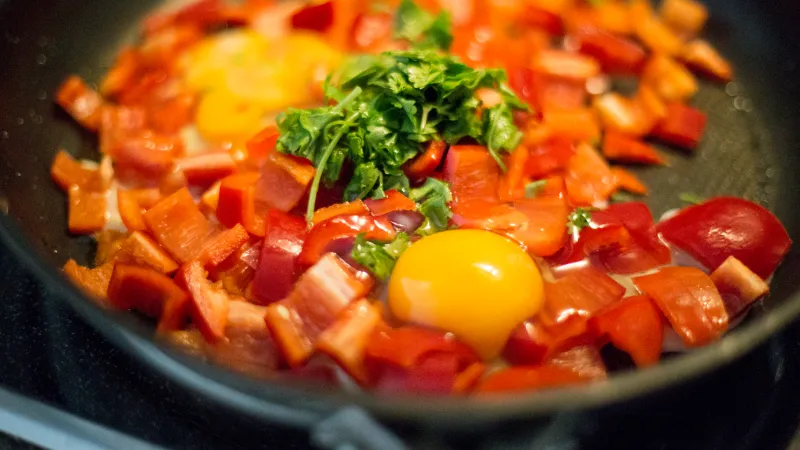
Let's be honest: most of us learned to scramble eggs by watching someone else do it fast. High heat, a hot pan, a quick scramble with a spatula, and done in under two minutes. It works — technically. But if you've ever slid a pile of eggs onto a plate only to watch a puddle of liquid form underneath them, you already know that "works" and "good" aren't the same thing.
Here's the thing: those watery eggs aren't a seasoning failure or a bad egg situation. They're a physics problem. And once you understand what's actually happening inside that pan, fixing it becomes almost automatic.
What's Going On Inside a Scrambled Egg
Eggs are mostly water — about 75% by weight — held together by a network of proteins. When you apply heat, those proteins begin to unfold and bond with each other in a process called coagulation. Done gently, this creates soft, cohesive curds that hold onto their moisture. Done aggressively, it's a different story.
High heat causes egg proteins to seize up and contract rapidly. Think of it like wringing out a wet sponge: as the proteins tighten, they physically squeeze out the water that was trapped inside the curd structure. That expelled liquid is exactly what pools on your plate. The eggs look cooked — they are cooked — but the texture is simultaneously rubbery and wet, which is the worst of both worlds.
There's also a timing issue. Eggs don't stop cooking the moment they leave the heat. The residual warmth in the pan and in the eggs themselves keeps driving coagulation forward. If you pull eggs off a screaming-hot burner at what looks like the perfect moment, they're already overcooked by the time they reach the table.
Why Low-and-Slow Heat Is the Answer
French bistro cooks have understood this for a long time. The classic French approach to scrambled eggs — oeufs brouillés — looks almost nothing like the American diner version. The eggs are cooked low and slow, often with constant stirring, until they form loose, creamy curds that barely hold their shape. No browning. No rubbery edges. Just pure, custardy egg.
The science backs this up completely. Egg whites begin to set around 144°F, while yolks firm up closer to 158°F. The window between those two temperatures is where the magic lives — it's warm enough to cook the eggs through, but gentle enough to keep the protein network from contracting so hard that it pushes out moisture. Cooking low and slow keeps you in that sweet spot for longer, giving you far more control.
The challenge is that most home stovetops, especially gas burners, make genuinely low heat hard to achieve. Even on the lowest setting, a thin skillet can run hotter than you'd expect. That's where the two-pan method comes in.
The Two-Pan Fix: Borrowed from the French, Built for Your Kitchen
This technique is essentially a simplified double boiler, and it's one of the most forgiving ways to cook eggs you'll ever try.
What you need: Two pans — one larger skillet or saucepan filled with an inch or two of simmering water, and one smaller skillet or heatproof bowl that sits over it without touching the water.
How it works: Crack and whisk your eggs as usual, then pour them into the top pan or bowl. The steam from the simmering water below heats the eggs indirectly, holding the temperature around 160–170°F — right in that ideal coagulation zone. Stir constantly with a silicone spatula, pulling the eggs from the edges toward the center.
Because the heat is so diffuse, you have an almost absurdly wide margin for error. The eggs will take 8 to 12 minutes rather than 90 seconds, but what you get in return is complete control. The curds form slowly, stay tender, and hold their moisture all the way to the plate.
When the eggs look about 80% done — still slightly glossy and just barely underset — pull the top pan off the heat entirely. Residual warmth will carry them the rest of the way while you plate up.
The Residual Heat Method: Faster, Still Effective
If setting up a double boiler on a Tuesday morning feels like too much of a commitment, there's a slightly faster version that still beats the high-heat scramble.
Use a heavy-bottomed skillet — cast iron or stainless steel works well here, though nonstick is fine too. Set the burner to the absolute lowest setting and let the pan preheat for a full minute. Add butter, let it melt slowly without foaming aggressively, then pour in your eggs.
Here's the key move: stir constantly, and every 20 to 30 seconds, lift the pan completely off the burner for 10 to 15 seconds. Let the residual heat in the pan do the work, then return it to the flame. This on-off rhythm mimics the temperature control of the double boiler without the extra equipment. Pull the eggs off heat when they're still just a little underdone. Carry-over cooking does the rest.
A Few More Details That Matter
Salt timing: Salt draws moisture out of proteins over time, so adding it to beaten eggs and letting them sit for more than a few minutes can actually contribute to a wetter texture. Season right before cooking, or season on the plate.
Fat choice: Butter adds flavor and helps lubricate the protein network, keeping curds from bonding too tightly to each other. A tablespoon per two eggs is a reasonable starting point.
Dairy: A small splash of heavy cream or crème fraîche stirred in at the end — off heat — adds richness and cools the eggs slightly, which helps stop cooking right when you want it to.
Pan size: Use a pan that feels slightly too small for the number of eggs you're making. Spreading eggs thin across a large surface increases the rate of moisture evaporation and makes it easier to overshoot the texture.
The Bigger Lesson Here
Scrambled eggs are one of those dishes that seem so simple they barely warrant a second thought — until you eat a version done right and realize you've been settling. The difference between watery, overcooked eggs and soft, creamy curds isn't talent or fancy equipment. It's understanding what heat actually does to proteins, and choosing a technique that works with that science instead of against it.
Slow down, lower the flame, and let the eggs tell you when they're done. That's it. That's the whole lesson. And once you've had scrambled eggs made this way, you'll have a hard time going back.