The Real Reason Your Steak Crust Is Sad — And the Cast Iron Fix That Changes the Game
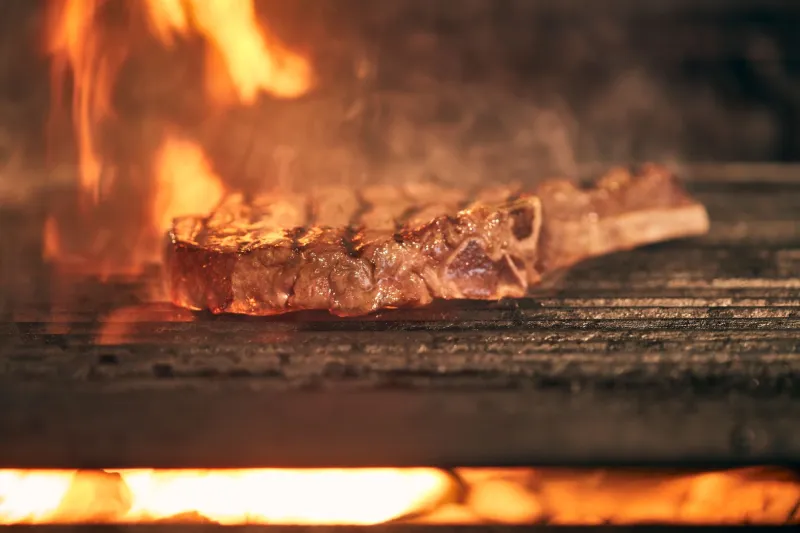
You've bought a beautiful ribeye. You've let it sit on the counter for twenty minutes like every recipe told you to. You heat up a pan, lay the steak down, and... it steams. It turns gray. The crust, if you can call it that, is thin and pale, nothing like the mahogany bark you get at a good steakhouse. You blame the cut, or your stove, or some vague sense that restaurants just have access to better ingredients.
Here's the truth: the cut is almost never the problem. The problem is chemistry — specifically, a chemical process called the Maillard reaction — and the good news is that once you understand what's actually going on in that pan, you can control it.
What the Maillard Reaction Actually Is
The Maillard reaction is the reason seared meat smells incredible, why toast is better than bread, and why the bottom of a roasting pan has all that sticky, flavorful fond. It's a cascade of chemical reactions between amino acids and reducing sugars that happens when food hits temperatures above roughly 280°F — and it produces hundreds of flavor compounds simultaneously.
Below that threshold, you're not getting browning. You're getting steaming, and steamed steak is just sad.
Restaurant kitchens run their burners at BTU levels that home stoves can't match. A commercial range might pump out 30,000 BTUs. Your home burner is probably doing 8,000 to 12,000 on a good day. That gap matters enormously when you're trying to drive surface temperature high enough, fast enough, to build a real crust before the interior overcooks.
But here's what the pros figured out: you can compensate for a weaker heat source with the right pan, the right fat, and the right prep. You don't need a restaurant stove. You need to stop fighting the chemistry.
The Three Mistakes That Kill Your Crust
Mistake 1: Wet meat in a cold pan.
Moisture is the enemy of browning. When a wet steak hits a pan, that surface water has to evaporate before the Maillard reaction can even begin. That takes energy — energy that should be going into building your crust. Meanwhile, the meat is essentially steaming itself.
Professional kitchens dry-brine their steaks. It sounds fancy, but it's just salt applied in advance and left uncovered in the fridge. Salt draws moisture to the surface through osmosis, that moisture then dissolves the salt, and the resulting brine gets reabsorbed into the meat over time. By the time you're ready to cook, the surface is noticeably drier and the interior is seasoned all the way through — not just on the outside. A minimum of 45 minutes works, but overnight is better. Pat the steak dry right before it hits the pan regardless.
Mistake 2: A crowded pan.
Every piece of protein releases moisture as it cooks. In a properly sized pan with one steak, that steam escapes. In an overcrowded pan, it has nowhere to go — it pools, it lingers, and your Maillard reaction stalls out completely. One steak per pan. Every time.
Mistake 3: Moving the steak too soon.
A steak that sticks to the pan isn't ready to be flipped. When a proper crust forms, the meat naturally releases from the surface. If you're prying it up and tearing the crust off in chunks, you pulled it too early. Patience here isn't just a virtue — it's a technique.
Why Cast Iron Is the Home Cook's Secret Weapon
Cast iron holds heat the way a cast iron pan holds heat — which is to say, extremely well and very evenly. Unlike stainless steel or thin nonstick pans, cast iron doesn't experience dramatic temperature drops when cold meat hits the surface. That thermal stability is exactly what you need to keep the Maillard reaction running at full speed through the entire sear.
Preheat your cast iron over medium-high heat for at least five minutes before the steak goes in. You want it ripping hot — a drop of water should skitter and evaporate almost instantly. This is longer than feels comfortable. Do it anyway.
The Fat Question: Why Restaurants Use Clarified Butter
Regular butter burns around 350°F. That's not hot enough for a serious sear, and if your pan is as hot as it should be, whole butter will scorch before your crust is done. Restaurants solve this with clarified butter — butter with the milk solids removed — which has a smoke point closer to 450°F and delivers that rich, nutty flavor without the burn.
At home, you have two solid options: use a neutral high-smoke-point oil like avocado or refined grapeseed to start the sear, then add a knob of whole butter toward the end for flavor. Or keep a jar of ghee in your pantry — it's clarified butter that you can find at most grocery stores now, and it works beautifully here.
The Basting Move That Finishes the Job
Once your steak has developed a crust on the first side and you've flipped it, this is when restaurant cooks do something that home cooks almost never do: they baste. Tilt the pan slightly, let the butter pool at the edge, and use a spoon to continuously pour that hot fat over the top of the steak.
This does two things. First, it cooks the top surface through convective heat — essentially cooking the steak from both directions at once. Second, the fat carries flavor compounds from the pan back onto the meat with every pass. Add a smashed garlic clove and a sprig of thyme to the butter before you start basting and you've just made your kitchen smell like a very good restaurant.
Putting It All Together
Here's the full sequence, simplified:
- Dry-brine your steak at least 45 minutes ahead (overnight if you can). Salt generously, set it on a rack, leave it uncovered in the fridge.
- Pat completely dry with paper towels right before cooking.
- Preheat your cast iron over medium-high for a full five minutes. It should be genuinely hot.
- Add a high-smoke-point oil — just enough to coat the surface.
- Lay the steak away from you and don't touch it. Let it sear undisturbed until it releases on its own, usually 3 to 4 minutes depending on thickness.
- Flip once, then add butter, garlic, and herbs.
- Baste continuously until your target internal temperature is reached — 130°F for medium-rare, pulled a few degrees early since it'll carry over as it rests.
- Rest for at least five minutes before cutting. The muscle fibers need time to reabsorb juices that have been pushed toward the center during cooking.
None of this requires special equipment beyond a cast iron pan and a reliable instant-read thermometer. What it requires is understanding why each step matters — because when you know the chemistry, you stop guessing and start cooking with intention.
Your steak isn't failing because of the cut. It's failing because of conditions you have the power to change. Fix the conditions, and the crust takes care of itself.