The Cut Can Wait: What's Really Happening Inside Your Meat While It Rests
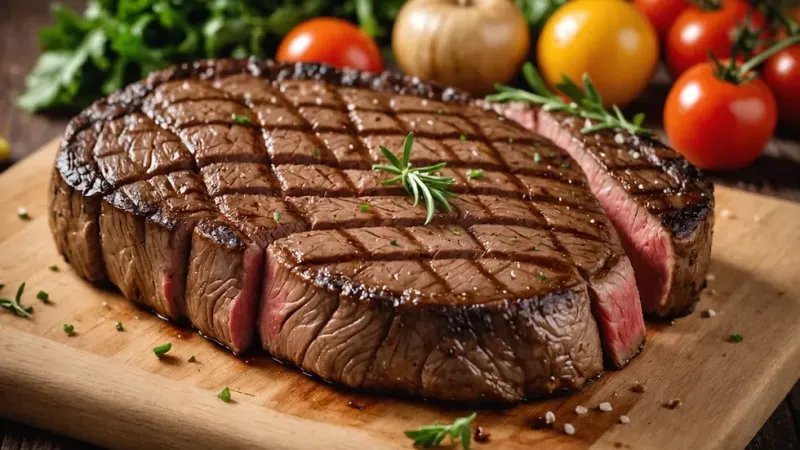
Photo: resting cooked steak cutting board kitchen meat juices, via static.wixstatic.com
Every grilling guide, every roast recipe, every Thanksgiving turkey tutorial tells you the same thing: let the meat rest before you cut it. And most home cooks comply, more or less, hovering impatiently over the cutting board for a few minutes before giving in. But "a few minutes" is doing a lot of interpretive work there, and the actual science behind resting is specific enough that getting it vaguely right and getting it precisely right produce noticeably different results on the plate.
So let's get into what's actually happening — because once you understand the mechanics, the resting period stops feeling like an arbitrary waiting game and starts feeling like an active part of the cooking process.
Muscle Fibers Under Stress
Meat is muscle, and muscle is made up of long protein fibers bundled together and surrounded by connective tissue. Those fibers contain a significant amount of moisture — a raw chicken breast is about 75% water, and a raw beef tenderloin runs around 70 to 72%. That moisture is held within the muscle cell structure, bound to proteins like myosin and actin.
When heat hits muscle fibers, those proteins begin to denature — they unwind from their natural coiled structure and tighten up. Myosin starts denaturing around 120°F. Actin follows at around 150°F to 163°F. As these proteins contract, they physically squeeze the moisture they've been holding. Think of it like wringing out a wet cloth: the tighter the fibers contract, the more liquid gets pushed out.
At the moment you pull a steak off a cast iron skillet, the muscle fibers near the exterior — which have been closest to the heat source — are tightly contracted. The interior fibers are slightly less so, depending on your target doneness. The moisture in those fibers has been pushed toward the center of the cut, where it's concentrated and under pressure. If you slice into the meat right now, that pressurized liquid has only one place to go: straight onto your cutting board.
The Relaxation Phase
Resting gives those contracted muscle fibers time to relax. As the meat sits off the heat, the proteins — now denatured but no longer under active thermal stress — begin to loosen their grip. The moisture that was squeezed toward the center starts redistributing more evenly throughout the cut. By the time you slice into a properly rested piece of meat, that liquid is no longer pooled and pressurized; it's dispersed through the muscle fibers and stays in the meat when you cut it.
This is the fundamental mechanism, and it explains the cutting-board juice puddle that appears when you skip the rest. You're not losing juice because you cut too aggressively or at the wrong angle. You're losing it because the fibers were still contracted when you cut, and the pressure had nowhere else to go.
Carryover Cooking: The Rest Is Still Cooking
Here's the part that changes how you think about doneness: resting isn't a passive pause. It's carryover cooking, and it's real and significant.
When you pull a large roast from the oven, the exterior of the meat is substantially hotter than the interior. Heat energy doesn't stop moving just because the roast left the oven — it keeps traveling from the hot outer layers inward, raising the internal temperature even off the heat. For a large prime rib or a whole turkey breast, this carryover can add anywhere from 5°F to 15°F to the final internal temperature.
This is why experienced cooks pull their meat before it hits the target temperature. A prime rib destined for 130°F (medium-rare) comes out of the oven at 120°F to 125°F and finishes during the rest. A smaller cut like a pork tenderloin, with less thermal mass, might only carry over 3°F to 5°F. The size of the cut determines how much carryover you're working with, and that changes when you pull it and how long it needs to rest.
Rest Times Are Not One-Size-Fits-All
This is where most general advice falls short. "Let it rest for ten minutes" is not a universal prescription — it's a rough average that works fine for some cuts and is wrong for others.
Steaks and thin chops (under 1 inch): Three to five minutes. These cuts have limited thermal mass, carryover is minimal, and the muscle fibers are close enough to the heat source that relaxation happens relatively quickly. Going much longer risks the steak cooling down to an unpleasant serving temperature.
Thick-cut steaks and pork chops (1 to 2 inches): Five to eight minutes. More thermal mass means more carryover and more time needed for fiber relaxation throughout the cut.
Whole chicken or turkey breast: Ten to fifteen minutes, tented loosely with foil. The mixed muscle types — white meat and dark meat — have different fiber densities and behave somewhat differently under heat. The rest allows both to equalize.
Large roasts — prime rib, leg of lamb, whole pork loin: Twenty to thirty minutes, uncovered or very loosely tented. The thermal mass here is substantial. Tight foil wrapping traps steam and can actually soften the crust you worked hard to develop, so keep the tent loose.
Whole turkey: Thirty to forty-five minutes. This is not excessive. A twenty-pound bird has enormous thermal mass and a complex internal temperature gradient. It needs the time.
The Tenting Debate
You'll see instructions to "tent with foil" almost everywhere, and it's worth unpacking why — and when it's counterproductive. Foil tenting slows heat loss from the surface of the meat, which helps maintain serving temperature during a long rest. For a large roast that'll sit for thirty minutes, it's useful. For a steak resting for five minutes, it's unnecessary and can trap steam that softens your hard-won crust. Match the tenting decision to the rest time: short rest on a seared cut, skip the foil. Long rest on a large roast, use a loose tent.
Why This Changes Your Timing Strategy
Once you internalize carryover cooking, your approach to the entire cooking process shifts. You're no longer cooking to a final temperature — you're cooking to a pull temperature, with the rest doing the finishing work. That reframe reduces overcooked meat dramatically, because you stop being afraid to pull the roast early. The heat is already in there. The rest will take it the rest of the way.
Patience at the cutting board isn't just politeness. It's the last step in a cooking process that started the moment the meat hit the heat.