The Reason Your Curry Ends Up a Soggy Mess — And the Add-In Order That Saves It
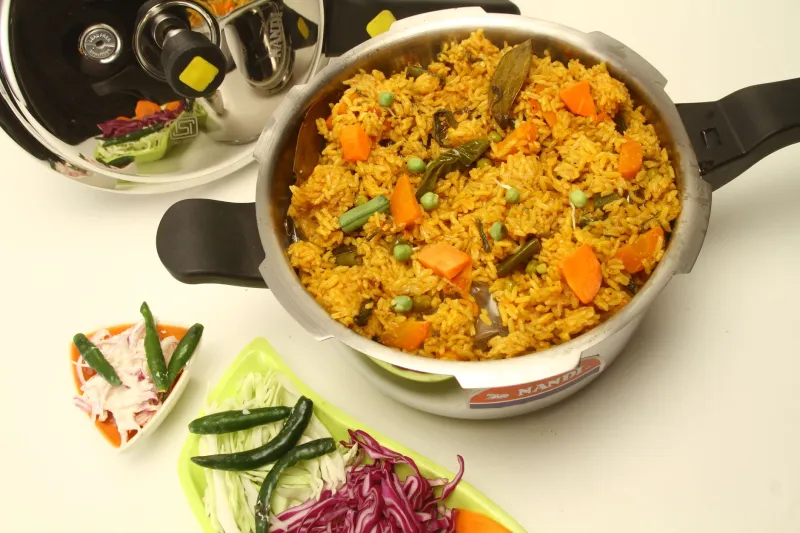
There's a particular kind of disappointment that comes with lifting the lid on a curry you've been simmering for forty-five minutes, only to find a pot of beige mush. The flavors are there. The aromatics did their job. But the vegetables — the carrots, the zucchini, the spinach — have all collapsed into the same soft, indistinguishable texture. It doesn't have to be this way.
The fix isn't a new spice blend or a better brand of coconut milk. It's timing. Specifically, it's understanding that different vegetables have completely different internal structures, different water content, and wildly different tolerances for heat and acid. Once you understand that, building a curry where every component has the right texture becomes almost automatic.
What's Actually Happening Inside Your Vegetables
All vegetables are made up of cells held together by a kind of biological glue called pectin. Pectin is a naturally occurring polysaccharide that lives in the cell walls and middle lamella — the layer that bonds adjacent cells to each other. When you apply heat, pectin begins to break down. The cells lose their structural support, water rushes out, and the vegetable softens.
The rate at which this happens varies enormously depending on the vegetable. Dense root vegetables like carrots and parsnips have thick, tightly packed cell walls and relatively low water content. They can handle long cooking times without falling apart — in fact, they need sustained heat to become tender at all. Delicate vegetables like spinach, peas, or fresh herbs are almost the opposite: their cells are large, loosely packed, and full of water. A few minutes in a hot liquid and they're done. Leave them longer and they turn gray and limp.
This is the core problem with the one-pot, everything-goes-in-at-once approach to curry. You're asking a carrot and a handful of baby spinach to finish at the same time. They won't.
How Acidity Changes the Equation
Coconut milk adds another layer of complexity. It's mildly acidic, and that acidity actually slows pectin breakdown. Acid helps stabilize the pectin structure, which means vegetables cooked in coconut milk-based curries can take longer to soften than vegetables cooked in plain water or stock. This is a feature when you want firm chickpeas or al dente potatoes, but it can be a trap if you're not accounting for it.
Tomato-forward curries work the other way. Tomatoes are quite acidic, and while that acid initially protects cell walls, the long cooking time combined with high heat eventually overwhelms the structure. Vegetables added early in a tomato-based curry — particularly watery ones like zucchini or eggplant — will absorb that acidic liquid and break down faster than you'd expect.
The takeaway: the base of your curry isn't just a flavor decision. It's a structural one.
A Practical Framework for Staggered Add-Ins
Think about your vegetables in three broad categories, and add them accordingly.
The long-haul vegetables — carrots, potatoes, sweet potatoes, turnips, winter squash — go in early, ideally within the first ten to fifteen minutes of the sauce coming together. These need sustained heat to become tender. In a coconut milk curry, give them even a few extra minutes since the acidity will slow things down.
The medium-range vegetables — cauliflower, green beans, bell peppers, eggplant, zucchini — go in during the middle stretch, roughly fifteen to twenty minutes before you plan to serve. They have enough structure to hold up to some cooking, but they'll turn soft and watery if they sit in a hot liquid for too long. Eggplant in particular has a spongy cell structure that soaks up liquid aggressively — add it too early and it disintegrates.
The quick-finish vegetables — spinach, frozen peas, fresh herbs, delicate greens — go in at the very end. Two to three minutes is usually all they need. If you're using spinach, you can literally stir it in off the heat and let the residual warmth wilt it. This preserves its color, its texture, and its flavor.
The Coconut Milk Timing Trick
Here's something most recipes don't tell you: when you add your coconut milk matters, too. If you add it at the very beginning and let everything simmer together for forty minutes, you're cooking your vegetables in an acidic, fat-rich liquid the entire time. The result is often a heavy, slightly curdled sauce with overcooked vegetables.
Instead, try building your curry paste and aromatics first, adding your dense vegetables with just enough stock or water to cover, and stirring in the coconut milk during the last fifteen to twenty minutes. This keeps the cooking environment cleaner for longer, gives your root vegetables a head start without the fat interference, and results in a coconut milk sauce that tastes bright and fresh rather than flat and heavy.
If you're working with full-fat coconut milk, give it a gentle stir before adding — the fat and liquid separate in the can, and incorporating them evenly before they hit the pot helps prevent that greasy film on top.
One More Thing: Salt and Osmosis
Salting your vegetables before they go into the curry — particularly watery ones like zucchini or eggplant — can help draw out excess moisture through osmosis. Toss sliced zucchini with a pinch of salt, let it sit for ten minutes, then blot it dry before adding it to the pot. You'll get a vegetable that holds its shape instead of releasing a flood of liquid into your sauce.
This also works for eggplant, which is notorious for absorbing oil and then releasing water in a way that makes sauces watery and greasy at the same time. A brief salt-and-drain step changes that dynamic entirely.
The Bigger Lesson
Curry is often taught as a one-pot, low-effort dish — and it can be. But low effort doesn't mean inattentive. Paying attention to what you're adding and when is the difference between a pot of mush and a bowl where the carrots are tender, the green beans have a little snap, and the spinach is still vivid green. The spices haven't changed. The technique has.