The Smoky Restaurant Secret Your Home Stove Is Quietly Killing — And How to Fight Back
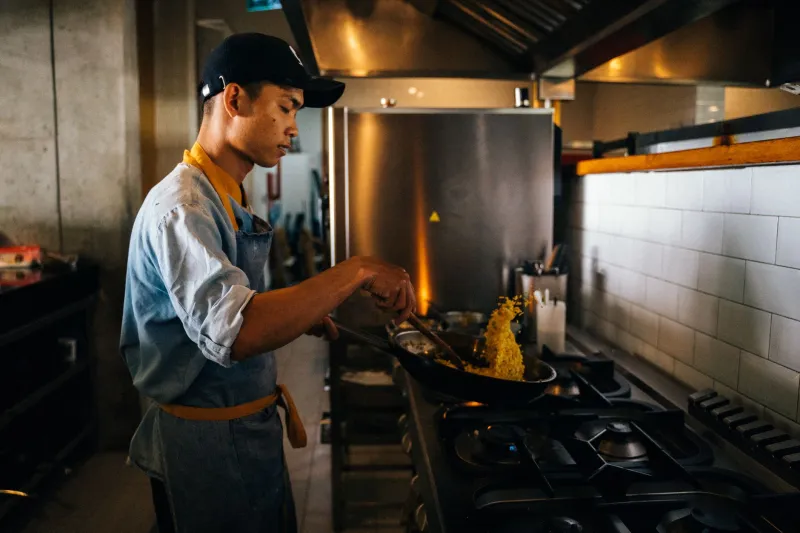
You've followed the recipe. You used day-old rice. You had your soy sauce, your sesame oil, your eggs cracked and ready. And yet, the fried rice that came out of your skillet tasted... fine. Maybe even good. But not that — not the version from your favorite Chinese-American takeout spot or the wok station at a dim sum restaurant, where every bite carries this toasty, slightly smoky depth that feels almost impossible to replicate.
Here's the thing: you didn't mess up the recipe. The recipe was never really the problem.
What Wok Hei Actually Is
Chinese cooks have a phrase for what makes great fried rice taste the way it does: wok hei, which translates loosely to "breath of the wok." It sounds poetic, but there's real food science underneath it. Wok hei is the product of multiple simultaneous chemical reactions happening at temperatures most home stoves simply cannot sustain.
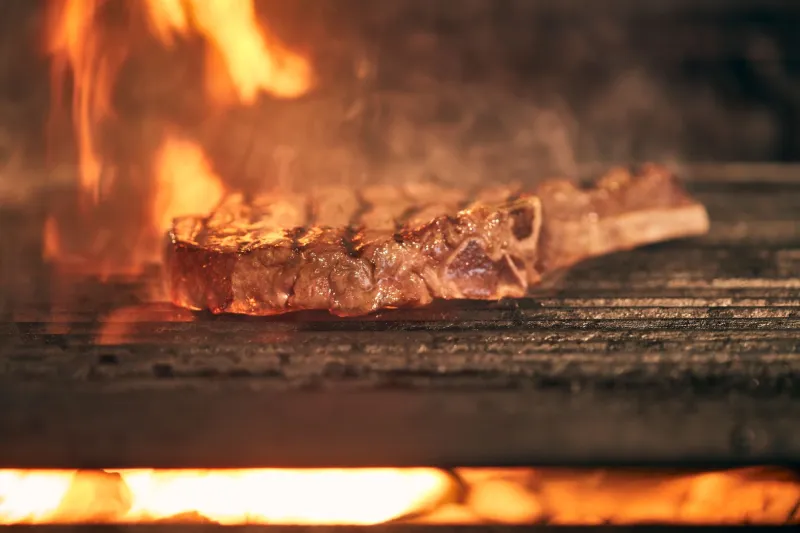
The most important of these is the Maillard reaction — the same browning process responsible for a good sear on a steak or a golden crust on bread. When proteins and sugars in food are exposed to temperatures above roughly 280°F, they begin to react with each other, producing hundreds of new flavor compounds. These compounds are what we perceive as that roasty, nutty, savory complexity. At a wok station in a restaurant kitchen, burners can hit 100,000 BTUs or more. Your home gas burner? Probably somewhere between 7,000 and 15,000 BTUs. A standard electric coil? Even less.
But Maillard browning is only part of the story. Wok hei also involves vaporization and combustion — specifically, small amounts of oil and food particles that get tossed into the air during the cooking process and briefly ignite in the flame. That micro-combustion is what gives wok-cooked food a faint smokiness that's genuinely different from any other cooking method. It's not char. It's not just browning. It's a flavor that technically requires fire.
Why Your Stove Is the Bottleneck
When you dump cold ingredients into a pan on a home burner, the temperature of the cooking surface drops — fast. A restaurant wok station recovers almost instantly because the heat source is so powerful. At home, you can wait 30 to 60 seconds for the pan to climb back up to a useful temperature, and by then, your ingredients aren't searing. They're steaming.
Steaming is the enemy of fried rice. It's what makes the rice clump, turns the eggs rubbery, and produces that flat, cafeteria-tray flavor you're trying to avoid. The vegetables release water. The rice releases moisture. Instead of each grain getting a quick, hot kiss from a screaming-hot surface, everything just kind of... stews together.
This is also why crowding the pan is such a critical mistake. More food means more moisture, more temperature drop, and less chance of actual browning. Restaurant cooks work in small batches — often a single serving at a time — precisely because volume is the enemy of heat.
The Day-Old Rice Thing Is Real, But Here's Why
You've probably heard that fried rice needs day-old rice. This is true, but the reason matters more than the rule. Freshly cooked rice is full of surface moisture and gelatinized starch. When it hits a hot pan, that moisture turns to steam and you're back to the same problem.
Rice that's been refrigerated overnight loses a significant amount of surface moisture through evaporation. More importantly, the starch undergoes a process called retrogradation — the starch molecules partially re-crystallize, which makes the grains firmer and less sticky. That structural change means each grain can withstand high heat without turning to mush, and the drier surface browns instead of steams.
If you don't have day-old rice, spread freshly cooked rice on a sheet pan and refrigerate it uncovered for at least a couple of hours. It won't be quite as good as true overnight rice, but it'll get you most of the way there.
How to Actually Get Close at Home
You're not going to fully replicate wok hei on a home stove. Anyone who tells you otherwise is being optimistic. But you can get meaningfully closer with a few strategic adjustments.
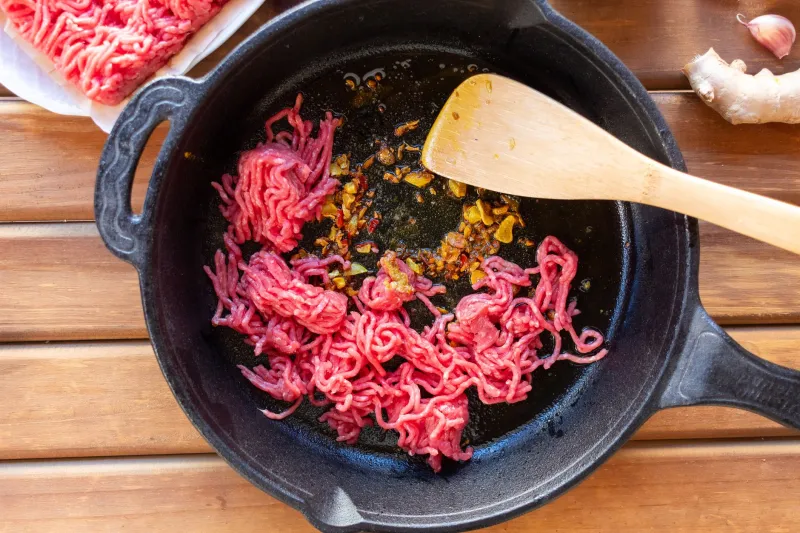
Use a cast iron skillet or carbon steel pan, and preheat it aggressively. Set it over your highest burner on high heat for a full four to five minutes before you add anything. Cast iron holds heat exceptionally well — it won't drop temperature as dramatically as a thin stainless or nonstick pan when cold ingredients hit it. Carbon steel heats more evenly and responds faster. Either way, you want the pan so hot that a drop of water skitters and evaporates in under a second.
Cook in small batches. This is non-negotiable. If you're making fried rice for four people, cook it in two or three batches and combine at the end. Overcrowding a home pan is the single fastest way to undo all your prep work.
Use an oil with a high smoke point. Refined peanut oil is traditional and excellent. Avocado oil or refined vegetable oil also work. You want the oil itself to handle high heat without breaking down and turning bitter before your food even has a chance to brown.
Add a small amount of butter at the very end. This is not traditional, but it's a useful workaround. Butter contains milk solids that brown quickly and contribute Maillard-reaction flavor compounds similar to some of what you lose by not having that high-heat combustion. A half teaspoon stirred in right before serving adds a nutty richness that edges you closer to restaurant complexity.
Season with soy sauce early, not late. Adding soy sauce to the hot pan rather than tossing it in at the end allows the sugars and proteins in the sauce to hit the hot surface and undergo their own browning. You'll smell the difference immediately — there's a toasty, slightly caramelized note that you simply don't get from soy sauce added as a finishing drizzle.
The Honest Takeaway
Wok hei is, at its core, a product of industrial heat that home kitchens weren't designed to produce. That gap is real, and no technique fully closes it. But understanding why the gap exists — the Maillard reaction, moisture management, vaporization dynamics — gives you a much better toolkit than just following a recipe and hoping for the best.
The best homemade fried rice isn't a perfect copy of the restaurant version. It's a smart adaptation: drier rice, smaller batches, a screaming-hot pan, and a few strategic additions that compensate for what your burner can't do. That's not failure. That's cooking smarter.