That Smoky, Charred Magic in Takeout Fried Rice Has a Name — Here's Why You Keep Missing It at Home
That Smoky, Charred Magic in Takeout Fried Rice Has a Name — Here's Why You Keep Missing It at Home
You've tried. You've really tried. You bought the soy sauce your favorite takeout spot probably uses. You added the sesame oil at the end like every recipe told you. You even threw in that little drizzle of oyster sauce. And yet, when you plate your homemade fried rice next to a container from your neighborhood Chinese restaurant, there's no comparison. The restaurant version has this smoky, almost breath-of-fire quality to it — a complexity that your version simply doesn't touch.
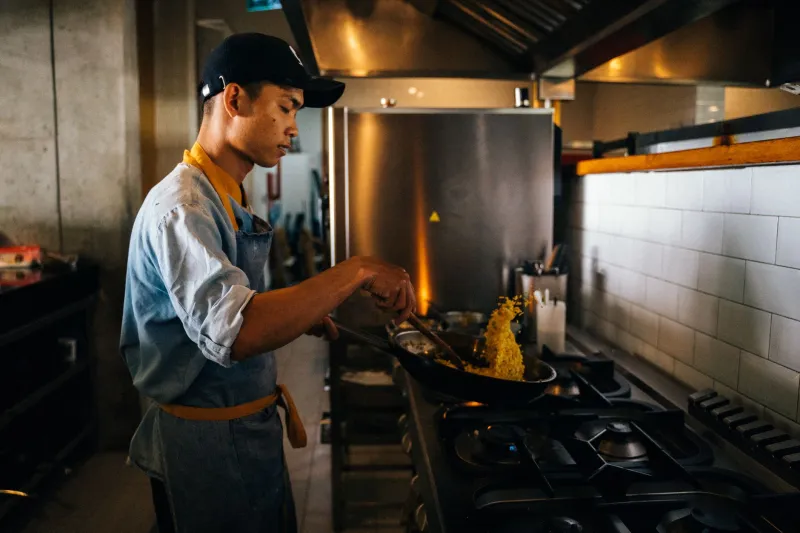
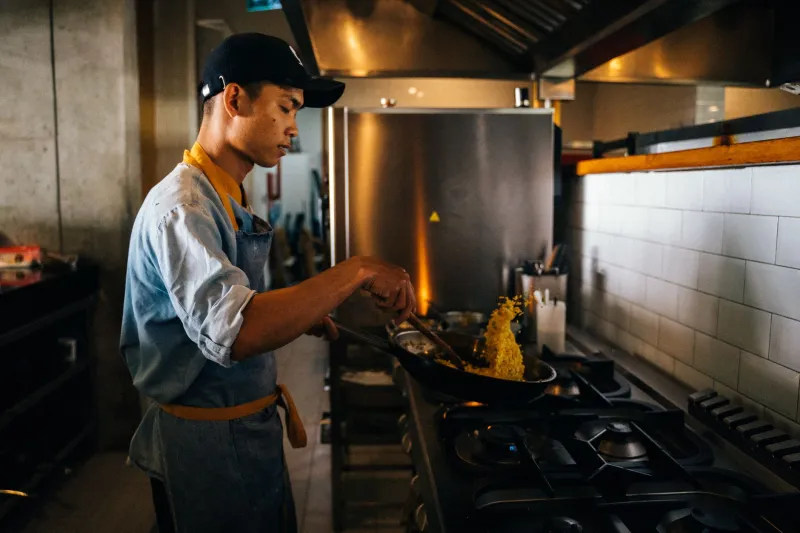
That quality has a name: wok hei. Translated loosely from Cantonese, it means "breath of the wok," and it's not a seasoning you can buy. It's a reaction. Several of them, actually. And once you understand the science behind it, you'll stop blaming your ingredients and start understanding exactly what needs to change.
What Wok Hei Actually Is (It's More Than Just Heat)
Most people assume wok hei is purely about high temperature — crank your burner up, things get smoky, problem solved. That's part of it, but it's a significant oversimplification.
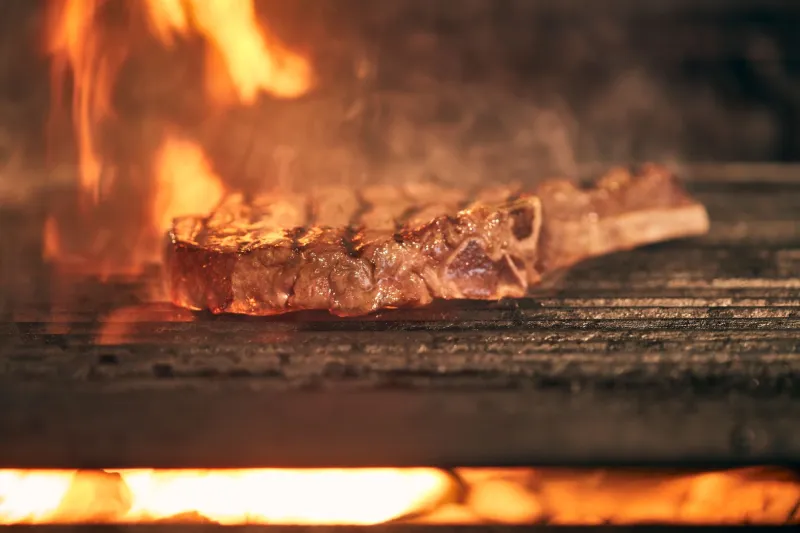
Wok hei is the product of multiple simultaneous chemical reactions happening at extreme speed. The most important is the Maillard reaction, the same browning process responsible for a good sear on a steak or the crust on a well-made loaf of bread. The Maillard reaction occurs when amino acids and reducing sugars in food are exposed to high heat — roughly above 280°F — and begin producing hundreds of new flavor compounds. Those compounds are what give browned food its complexity, its nuttiness, its depth.
But in a wok at a Chinese restaurant, the Maillard reaction is happening at a pace that's almost violent. Commercial wok burners — the kind mounted into restaurant ranges — can produce anywhere from 100,000 to 200,000 BTUs. For context, a high-end home gas range might hit 18,000 to 25,000 BTUs on its strongest burner. That gap isn't trivial. It's the difference between a gentle summer afternoon and the surface of a cast iron skillet left on a campfire for an hour.
At those temperatures, the wok also ignites the oils and food particles that volatilize off the food, creating brief flares that deposit additional smoky, slightly carbonized flavor compounds directly onto the rice and ingredients. That's the "breath" part — literal combustion, happening right in the pan.
Moisture Is the Enemy You're Not Thinking About
Here's where most home cooks go wrong before they even turn on the stove: they use freshly cooked rice.
Freshly steamed rice is loaded with surface moisture. When you dump it into a hot pan, that moisture immediately begins to steam — and steam is the opposite of what you want. Instead of the Maillard reaction firing off, you get a humid microenvironment in the pan that keeps the rice's surface temperature hovering right around 212°F, the boiling point of water. You cannot brown food that's busy steaming. You just can't. The physics won't allow it.
Day-old rice — the kind that's spent a night uncovered in your refrigerator — has lost a significant portion of that surface moisture. The grains are drier, firmer, and slightly separated. When they hit a hot pan, they're ready to brown rather than steam. This is not a chef's trick or a preference. It's thermodynamics.
If you're making fried rice on a whim and don't have day-old rice on hand, spread freshly cooked rice on a sheet pan and run it under a low oven or even a fan for 20 to 30 minutes. It's not identical, but it removes enough surface moisture to make a meaningful difference.
Why Your Pan Matters Almost as Much as Your Burner
A nonstick skillet is convenient. It's also nearly useless for fried rice if you're chasing wok hei.
Nonstick coatings are designed to prevent food from bonding to the pan's surface — which is precisely the opposite of what you want during the Maillard reaction. You want the rice to make aggressive, sustained contact with a blazing hot surface. You want a little sticking. That contact is where the flavor happens.
Carbon steel is the material of choice, and it behaves remarkably like a traditional wok once it's properly seasoned. It heats quickly, holds heat well in the areas that matter, and develops a natural patina over time that contributes its own subtle flavor to whatever you cook in it. A 12- to 14-inch carbon steel skillet — flat-bottomed, so it actually makes contact with your home burner — is the closest practical substitute for a restaurant wok on a residential range.
Cast iron works too, though it's slower to heat and heavier to maneuver. The tradeoff is that once cast iron is hot, it holds that heat aggressively, which can help compensate for a burner that's not putting out massive BTUs.
The Counterintuitive Technique That Closes the Gap
Professional wok cooks toss food constantly — keeping it airborne, exposing every surface to the flame, letting the wok's edge ignite briefly. At home, you can't replicate that airflow or that flame contact. But you can do something that partially compensates: cook in smaller batches than you think you need to.
Overcrowding is where home fried rice dies. When you add too much rice at once, the pan temperature drops immediately, moisture accumulates, and you're back to steaming instead of browning. Instead, work in portions that leave actual empty space in the pan. Cook your aromatics first, remove them. Cook your protein, remove it. Then cook the rice in a layer thin enough that it can make real contact with the pan surface. Combine everything at the very end, over high heat, for just long enough to bring it together.
Also: resist the urge to stir constantly. Let the rice sit. Let it make contact. Give it 30 to 45 seconds of uninterrupted time against the hot surface before you move it. That's where the browning happens.
A Note on Fat and Smoke Point
The oil you use matters more than most recipes acknowledge. Butter and olive oil — both beloved in Western cooking — have relatively low smoke points and will break down before your pan reaches the temperature you need. For fried rice, you want a neutral oil with a high smoke point: refined avocado oil, refined peanut oil, or plain vegetable oil all work well. These can handle the heat without burning bitter.
Add a small amount of toasted sesame oil at the very end, off the heat, as a finishing note. It's too delicate to cook with at high temperatures, but as a finisher it delivers that familiar aromatic quality without burning off or turning acrid.
You Won't Replicate It Perfectly — But You Can Get Surprisingly Close
Let's be honest: a home kitchen is not a restaurant kitchen, and a residential gas burner is not a commercial wok range. Perfect wok hei at home is a moving target. But understanding the science — the Maillard reaction, the role of moisture, the importance of sustained high-heat contact — means you're no longer throwing things at the wall and hoping.
Dry rice. Ripping-hot carbon steel. Small batches. High smoke-point oil. Patience between stirs. These aren't arbitrary tips pulled from a recipe blog. They're direct responses to the chemistry of what wok hei actually is. Follow the science, and your homemade fried rice will be in a completely different league than whatever you've been making before.